Menu

Latest News

AJK Approves PKR 35 Billion Development Boost for Infrastructure and IT
The Azad Jammu and Kashmir government has approved 44 development projects worth PKR 34.85 billion to modernize regional infrastructure and improve public services. Chaired by Prime Minister Raja Faisal Mumtaz Rathore, the initiative prioritizes the expansion of road networks and link roads to better connect remote areas with urban centers. Additionally, the plan emphasizes human capital through the establishment of IT excellence centers for youth, alongside significant upgrades to healthcare facilities and educational infrastructure to raise living standards across the region.
Read more
CDA Appoints Creative Consultants to Transform Islamabad into a Tourism Hub
The Capital Development Authority has approved the hiring of creative consultants, acting as "city curators," to overhaul Islamabad’s urban design and establish the city as a cultural and tourism hub. Chaired by Sohail Ashraf, the initiative focuses on upgrading parks, public spaces, and green belts to enhance the city's aesthetic appeal and quality of life. This strategic move aims to modernize the capital’s identity, making it a more attractive destination for visitors while improving public infrastructure for residents.
Read more
Sindh Warns of 75,000 Cusec Shortfall as WAPDA Misses Tarbela Deadlines
The escalating water crisis in Sindh is reaching a critical tipping point as the province warns of a massive 75,000 cusec shortfall during the early Kharif sowing season. Irrigation Minister Jam Khan Shoro has formally alerted the federal government to "persistent delays" in WAPDA’s infrastructure projects at Tarbela Dam, specifically the deferred testing of the Tunnel-4 Low-Level Outlet (LLO) until May 2026. This technical bottleneck, combined with essential maintenance at the Tunnel-4 powerhouse, effectively traps water in the reservoir during the peak demand window for water-intensive crops like rice and cotton. With WAPDA and the regulator (IRSA) also at odds over reservoir storage levels 1,480 feet versus 1,520 feet—Sindh faces a repeat of last year’s devastating agricultural losses due to man-made operational constraints.
Read more
Pakistan Proposes 'Two-Tier' Framework to Halt US-Iran War
The high-stakes "Islamabad Accord" framework proposed by Pakistan seeks to de-escalate the intensifying US-Iran war through a two-tier strategy: an immediate 45-day ceasefire to reopen the critical Strait of Hormuz, followed by comprehensive in-person negotiations in Islamabad. While the proposal is backed by the U.S. and China, Tehran remains hesitant, demanding a permanent cessation of hostilities and guarantees against future strikes rather than a "temporary" truce. This diplomatic push occurs against a backdrop of devastating kinetic escalation, including the assassination of the IRGC’s intelligence chief, direct strikes on Tehran and Qom that have claimed dozens of civilian lives, and retaliatory Iranian cluster-missile barrages on Tel Aviv and Haifa, leaving the global energy market in a state of extreme volatility.
Read more
IMF Demands End to "Fuel Price Distortions" as Pakistan Navigates Massive Subsidy Pressures
The International Monetary Fund (IMF) has urged Pakistan to immediately eliminate "petroleum pricing distortions," specifically targeting the practice of using high petrol levies to cross-subsidize zero-rated diesel during the current harvest season. While the Fund has tacitly accepted a PKR 152 billion subsidy cap to shield consumers from global price spikes caused by the Strait of Hormuz conflict, it remains staunchly opposed to broad-based relief and is pushing for a transition to purely targeted support. As the government navigates a narrowing fiscal cushion following recent petrol price cuts and rising PKR 129 billion industry claims, the IMF is demanding a total overhaul of the macroeconomic framework ahead of the 2026–27 federal budget to ensure market-based energy pricing.
Read more
$250M World Bank Deal to Shield KP from '1-in-100 Year' Floods
To bolster Khyber Pakhtunkhwa’s defenses against intensifying climate threats, the World Bank is set to approve a $250 million IDA-funded project this June. The initiative transitions from reactive disaster management to long-term resilience, allocating $193 million to climate-hardened infrastructure such as embankments and check dams engineered to withstand 1-in-100-year flood events. Beyond physical barriers, the funding will overhaul early warning systems and community preparedness to mitigate the recurring economic toll, which has cost the province an estimated $2.3 billion in cumulative damages over the last 15 years.
Read more
PM Sharif Rallies Pakistan for 'Shared Sacrifice'
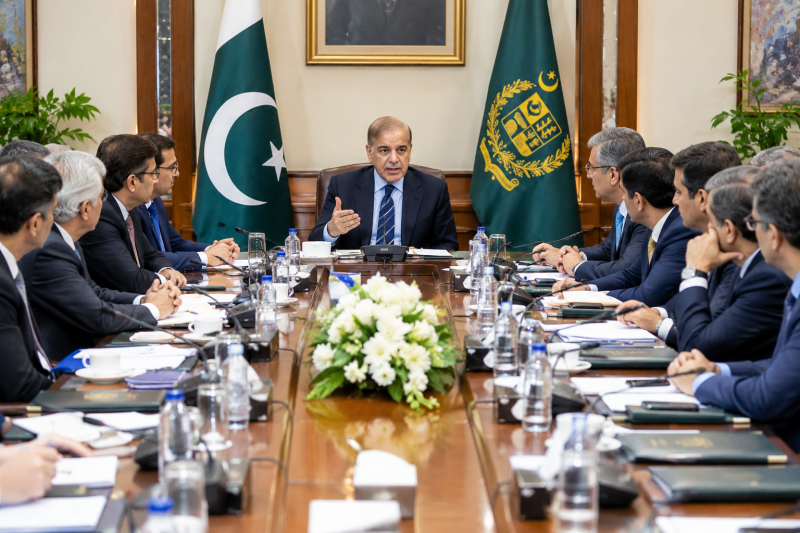
In a high-stakes bid to stabilize Pakistan’s economy against a backdrop of regional tension, Prime Minister Shehbaz Sharif has convened a rare assembly of political and military leadership to launch a rigorous nationwide austerity drive. Emphasizing that the country’s elite must lead by example, the Prime Minister announced aggressive federal cuts including salary waivers, a 50% reduction in fuel usage, and the redirection of PKR 100 billion toward relief efforts while urging provinces to abandon non-essential projects. This unified front, supported by both the military and major political allies, aims to mitigate the "public hardship" caused by rising petroleum costs while simultaneously pursuing diplomatic channels to secure regional peace and safeguard critical sectors like agriculture from inflationary shocks.
Read more
PM Rolls Out "Precision Subsidies" to Combat Record Fuel Costs
To mitigate the impact of a record-breaking fuel price hike which saw petrol and diesel surge by PKR 137.24 and PKR 184.49 per litre respectively the federal government has launched a multi-sector "precision subsidy" package. This targeted relief effort prioritizes the country’s most vulnerable, offering motorcycle owners a PKR 100 per litre discount (capped at 20 litres monthly) and providing substantial monthly stipends to public and goods transport operators to prevent a secondary spike in travel fares and grocery prices. Furthermore, the plan extends support to the agricultural backbone with a one-time PKR 1,500 per acre grant for small farmers, signaling a strategic shift toward data-driven, tiered assistance rather than unsustainable blanket subsidies as the government navigates global energy volatility.
Read more
PM Assures Stable Fuel Stocks
Prime Minister Shehbaz Sharif has assured the nation that Pakistan maintains sufficient petroleum reserves despite global supply chain disruptions caused by the escalating Middle East conflict. To mitigate the economic pressure of rising international oil prices, the government has reallocated Rs 125 billion from the development budget to subsidize fuel costs and is developing a digital, app-based relief program specifically for motorcycle and rickshaw drivers. While the PM credited "timely government decisions" for avoiding the fuel shortages seen in other countries, he urged citizens to adopt conservation measures, such as teleconferencing and reduced travel, to protect the national economy from further inflationary strain.
Read more