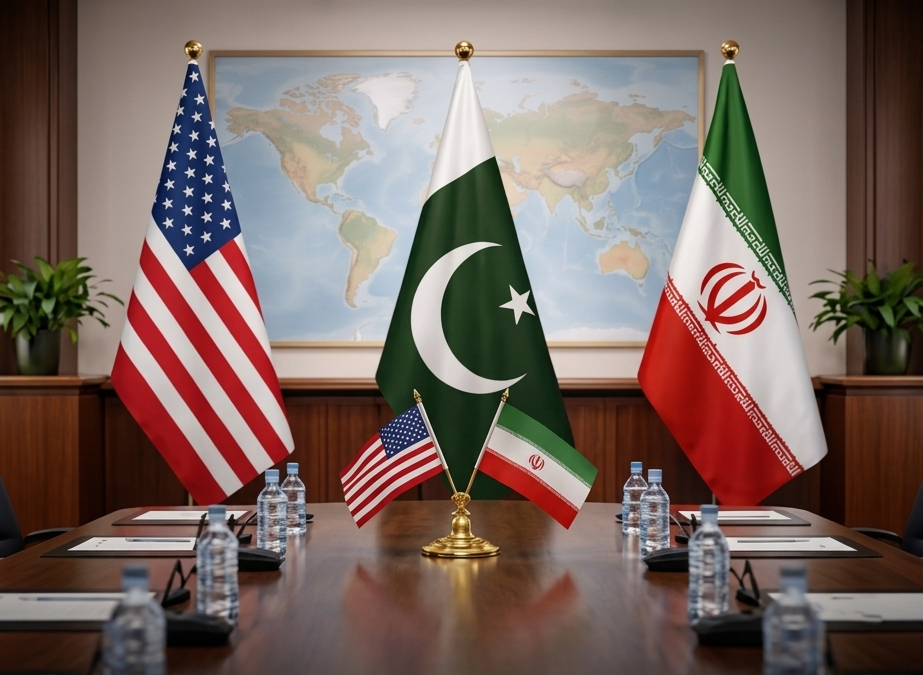
As regional hostilities reach a breaking point, Pakistan has officially tabled a ceasefire framework—tentatively dubbed the "Islamabad Accord"—aimed at an immediate cessation of violence and the reopening of the critical Strait of Hormuz.
The proposal, reportedly exchanged between Washington and Tehran overnight, suggests a two-phased approach: an immediate 45-day truce followed by high-level, in-person negotiations in Islamabad to secure a permanent settlement.
The Diplomatic Push
The "Islamabad Accord" is being facilitated through a unique channel of communication. Key developments include:
-
Direct Mediation: Chief of Army Staff Field Marshal Asim Munir has been in "all-night" contact with US Vice President JD Vance and Iranian Foreign Minister Abbas Araghchi.
-
The Terms: Under the proposal, Iran would reopen the Strait of Hormuz immediately in exchange for a 20-day window to finalize a broader deal, potentially involving sanctions relief and the release of frozen assets.
-
Current Status: While the US and China reportedly back the move, Tehran remains cautious. Senior Iranian officials told Reuters they would not accept a "temporary" fix or yield to "ultimatums and threats."
The Cost of Conflict: Recent Escalations
While diplomats talk, the kinetic war continues to claim lives and destabilize the region. The last 24 hours have seen a significant spike in casualties and strategic strikes.
1. Strikes on Tehran and Qom
Joint US-Israeli air strikes targeted the Iranian capital and the religious center of Qom early Monday.
-
Tehran: Strikes on the Baharestan district killed 15 people and destroyed multiple residential units. Sharif University of Technology was also reportedly targeted.
-
Qom: A missile strike on a city-center residential building killed at least five people, adding to a civilian death toll that has now surpassed 100 in the province since late February.
2. Intelligence Chief Assassinated
In a major blow to Iran’s security apparatus, the Head of the IRGC Intelligence Organization, Majid Khademi, was killed in what Iranian media termed an "American-Zionist terrorist attack." Israeli Defense Minister Israel Katz confirmed the hit, vowing to hunt Iranian leadership "one by one."
3. Retaliatory Missile Barrages on Tel Aviv & Haifa
Iran responded with three waves of cluster-warhead missiles targeting central Israel and Haifa.
-
Tel Aviv: At least seven people were injured as shrapnel fell across eastern areas of the city.
-
Haifa: Rescue teams recovered two bodies from the rubble of a five-story building struck by a ballistic missile late Sunday; several others remain missing.
4. Attacks on Nuclear & Regional Facilities
-
Bushehr Nuclear Plant: Iran has formally complained to the IAEA after the vicinity of its only functioning nuclear plant was struck for the fourth time, killing a security staff member.
-
Kuwait (Bubiyan Island): Iran claimed responsibility for drone strikes on US satellite equipment relocated to Bubiyan Island, resulting in six injuries from falling debris in northern Kuwait.
The Global Stakes: The Strait of Hormuz remains the world's most sensitive oil artery. With President Trump publicly demanding a "rapid end" to the conflict, the Islamabad Accord represents the most concrete diplomatic effort to date to prevent a total global energy shock.