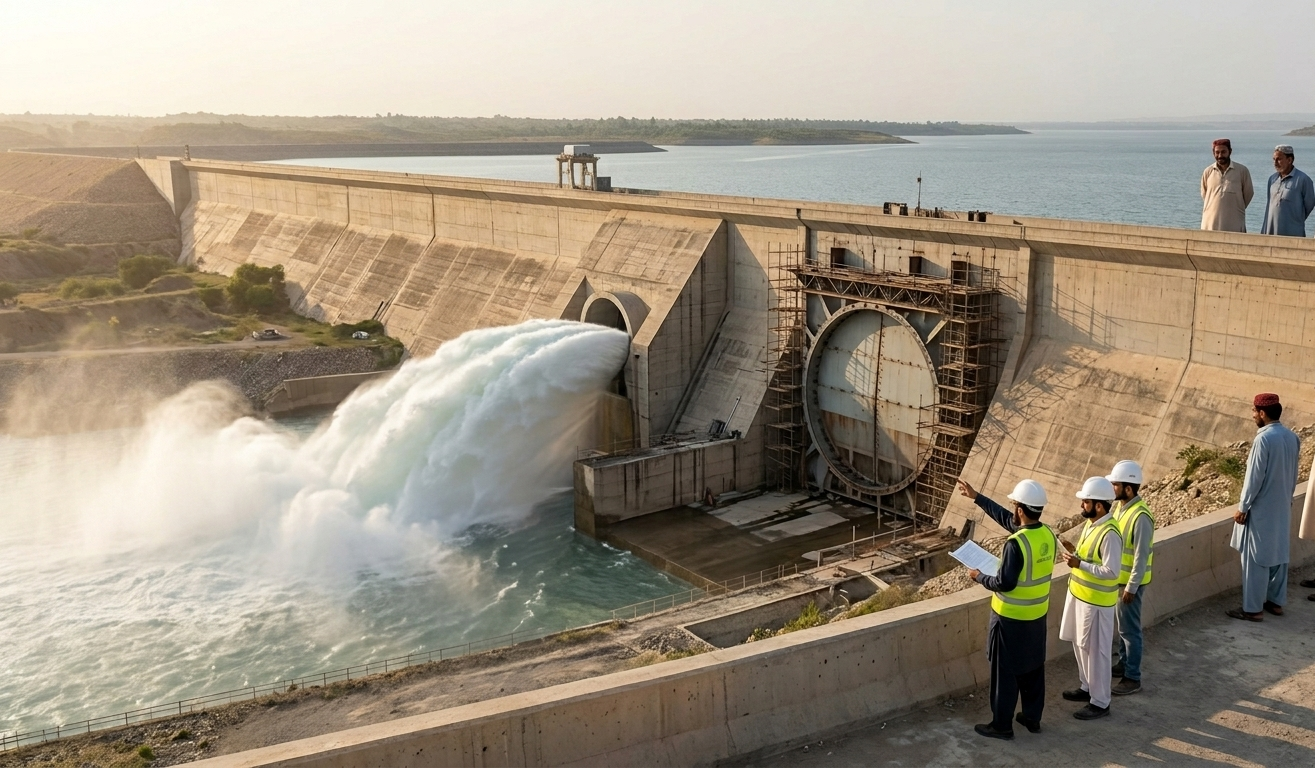
Sindh Irrigation Minister Jam Khan Shoro has formally alerted the federal government to "persistent delays" in WAPDA’s infrastructure projects at Tarbela Dam. These delays have moved past the original 33-month timeline approved in 2022, creating a bottleneck that threatens to starve the province's agricultural heartland of water exactly when it's needed most.
The crisis is driven by a specific technical failure: the testing of the Low-Level Outlet (LLO) at Tunnel-4 has been pushed back to May 2026. Without this outlet operational, 30,000 cusecs of water remain trapped. Simultaneously, mandatory repairs at the Tunnel-4 powerhouse are expected to sideline another 45,000 cusecs.
The Impact on Sowing Season
For Sindh, the timing couldn't be worse. The Kharif season dominated by water-intensive crops like rice and cotton begins immediately following the wheat harvest. This 75,000 cusec deficit means that even if the Tarbela reservoir has adequate water, the physical infrastructure is incapable of releasing it fast enough to meet demand.
The Storage Conflict: A secondary battle is brewing over reservoir levels. WAPDA wants to cap storage at 1,480 feet to keep their construction sites dry, while the regulator (IRSA) is pushing for 1,520 feet to ensure there is enough "buffer" for the summer heat.
An emergency federal meeting is currently underway to address these grievances. If WAPDA cannot provide a firm rescheduling plan, farmers in Sindh face a repeat of last year's devastating crop losses due to man-made operational constraints rather than a natural water shortage.