Menu

Laws & Taxes

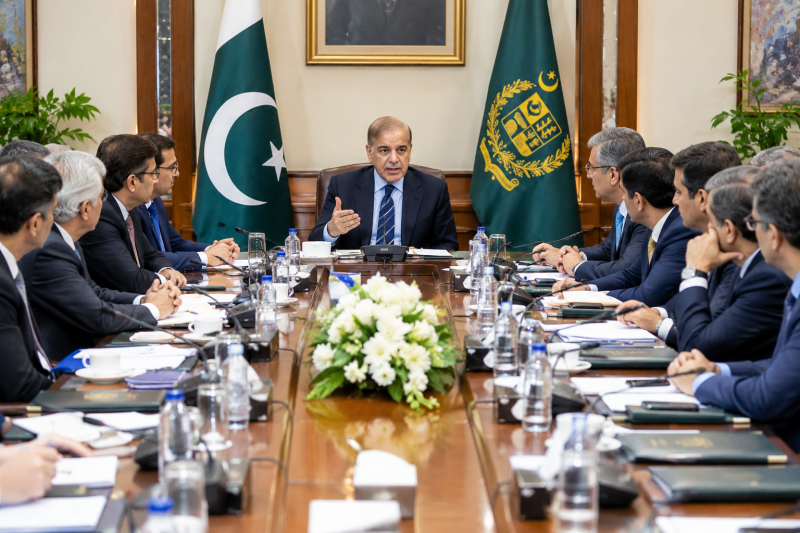
Pakistan Hits Rs8.1 Trillion Tax Milestone Amid Economic Revival
Pakistan’s economy is showing strong recovery signs as tax revenue reached Rs8.1 trillion in the first eight months of FY2025–26, up from Rs7.3 trillion last year. This growth is supported by a 4.8% rebound in Large-Scale Manufacturing led by a massive 67.2% spike in the automobile sector and a 11.3% increase in remittances, which hit $23.2 billion. On the trade front, ICT exports surged by 20%, helping drive services exports to $5.7 billion. While February inflation rose to 7% due to energy tariff adjustments, the cost of essential food items like eggs, chicken, and potatoes has actually dropped significantly. Planning Minister Ahsan Iqbal credited these gains to better tax compliance and increased development spending, though he warned that global energy volatility and Middle East tensions remain key risks to long-term stability.
Read more
The Slowdown of Pakistan’s Solar Momentum
The government’s transition from net metering to a more restrictive net billing system under the Prosumer Regulations 2026 has fundamentally altered the economics of solar energy in Pakistan. By forcing consumers to sell excess electricity back to the grid at significantly lower rates than they pay to import it, the new policy has drastically extended the payback period for solar investments and cooled a market that was previously the fourth largest in the world for solar imports. This slowdown poses a direct threat to Pakistan’s $100 billion export target, as industries particularly textiles urgently need cheap, green energy to comply with the European Union’s upcoming carbon taxes and remain competitive against regional rivals. Consequently, as policy uncertainty drives a sharp decline in solar panel imports, the market is shifting toward smaller, self-sufficient systems and increased battery storage, leaving the country to weigh the short-term goal of protecting grid revenue against the long-term necessity of a sustainable energy transition.
Read more
Fuel Prices Reach New Highs as Government Announces Rs8 Increase for Petrol and Rs5.16 for HSD
The government has implemented a significant fuel price hike effective March 1, 2026, raising petrol by Rs8 per litre and High-Speed Diesel (HSD) by Rs5.16 per litre. This adjustment brings the new price of petrol to Rs266.17 and HSD to Rs280.86, a move driven by recommendations from the Oil and Gas Regulatory Authority (OGRA) amid volatile global oil markets and regional instability in the Gulf.This increase is expected to place immediate financial pressure on middle- and lower-income households who rely on petrol for motorcycles and small vehicles. Furthermore, the rise in diesel prices the backbone of the transport and agricultural sectors—is likely to trigger a broader inflationary wave. As freight charges for trucks and buses climb, the costs of essential commodities like food grains and vegetables are anticipated to rise, while farmers face higher expenses for operating tractors and tube wells during the current crop cycle.
Read more
PTA Notifies Mobile Tariff Regulations 2025 to Stabilize Telecom Market
The Pakistan Telecommunication Authority (PTA) has implemented the Mobile Tariff Regulations 2025 to enhance consumer protection and stabilize the telecom market. Under this new framework, major operators (SMPs) are now prohibited from revising prices without prior regulatory approval, while all networks must obtain explicit user consent before activating any paid Value-Added Services to eliminate "silent" balance deductions. To address service quality concerns, the PTA also confirmed a spectrum auction for March 2026, which will mandate infrastructure upgrades for faster data speeds and better coverage, balancing Pakistan's status as a low-cost data market with the need for sustainable network growth.
Read more
Faisal Town Hit with Rs 406M Tax Concealment Notice
The Federal Board of Revenue (FBR) has issued a Rs 406.23 million tax demand against Faisal Town Pvt. Ltd. for alleged failures in withholding tax compliance during Tax Year 2023. The Large Taxpayer Office (LTO) Islamabad claims the developer failed to properly deduct or deposit taxes on property transactions and broker payments, creating transparency gaps in the high-value real estate venture. In response, Faisal Town has formally appealed the order, labeling it unlawful and legally groundless. The company argues that the FBR failed to identify specific defaulted transactions or payees and denied them a fair hearing before finalizing the demand. The case is now pending before the Commissioner Inland Revenue (Appeals).
Read more
Govt Eyes Major Tax Cuts to Revive Property Sector
The federal government is set to unveil a major relief package for the construction and property sectors, featuring significant tax cuts aimed at revitalizing industrial activity. Finance Minister Muhammad Aurangzeb confirmed that Prime Minister Shehbaz Sharif will soon announce the measures, which prioritize lowering property tax rates to stimulate investment and support the dozens of allied industries linked to construction. This initiative is part of a broader economic pivot toward export-led growth, with a similar relief package for the textile industry expected within the next two weeks to bolster sustained industrialization and job creation.
Read more
Pakistan Banks Cut ERF Rate by 3% to Aid Exports
Pakistan's banking sector voluntarily reduced the Export Refinance Facility (ERF) markup by 3%, lowering the end-user rate to 4.50% for exporters to boost foreign exchange earnings and economic recovery. This supports surging private sector credit (Rs 1.1T in FY25), SME/agriculture growth, and national efforts like circular debt reduction and PIA privatization. PBA Chairman Zafar Masud hailed it as backing exporters and the nation.
Read more
Pakistan Power Price Hike to Fuel Inflation, Aid Industry
Pakistan's proposed power tariff reforms will stoke inflation by shifting IMF-mandated subsidy cuts to middle-class households, while cutting industrial prices 13-15% for export relief. Middle-class bills may rise 50%, with 100-300 unit users facing up to 76% hikes from new fixed charges; low-income households get PKR 400 fees. NEPRA's solar export rate cuts spark review to avert grid defection amid utility strains.
Read more
Pakistan Meets 3 of 5 IMF Targets, Misses Retail Tax
Pakistan met 3 of 5 IMF fiscal targets for its next $1B tranche, hitting primary surplus (PKR4.1T), provincial cash surplus (PKR1.18T), and tax revenue goals, boosted by SBP profits and PKR823B petroleum levy. FBR missed PKR6.49T collection by PKR330B and retail income tax target despite broader scope. Provinces led gains; federal spending hit PKR7.1T under $7B IMF program.
Read more