Menu

Tag: Pakistan economy

Pakistan’s Trade Gap Expands Sharply in First Half of FY26
Pakistan’s trade deficit widened by 34.6% in the first half of FY26, reaching $19.2 billion. According to the Pakistan Bureau of Statistics, exports fell 8.7% to $15.18 billion, while imports rose 11.28% to $34.38 billion. In December alone, exports dropped 20% year-on-year, while imports increased 2%, underscoring ongoing strain on the country’s trade balance.
Read more
Government Borrowing Shows Sharp Turnaround
Government borrowing from banks has risen to Rs672 billion in the first half of FY26, reversing last year’s debt retirement trend. The State Bank of Pakistan reports that 86 per cent of the fiscal deficit is financed through banks, limiting liquidity for the private sector. Analysts expect higher borrowing in the second half due to revenue shortfalls. Despite increased dividend transfers of Rs2.7 trillion in FY25, reliance on domestic sources remains high as external funding lags. Meanwhile, the World Bank has approved $700 million under a $1.35 billion initiative to help Pakistan strengthen fiscal management and boost public sector efficiency.
Read more
Pakistan commits to fresh IMF measures after benchmark misses
Pakistan's government has agreed to 11 new IMF targets, including tax hikes and spending cuts from next month, after missing 11 prior benchmarks in its $7 billion Extended Fund Facility.Immediate actions address FBR shortfalls of Rs430 billion in FY26's first five months by raising excise duties on fertilizers, pesticides, and sugary items, plus shifting goods to 18% GST if revenues lag. Waivers cover misses on social spending, deficits, and tax returns, unlocking $1.2 billion disbursement post second review. Plans include FBR reforms by March 2026, tax policy strategy by December 2026, agriculture tax optimization, SEZ incentive phase-out by 2035, power sector privatizations starting early 2026, asset declarations, NAB risk plans, and SOE/SWF law amendments by mid-2026
Read more
UAE Now Processing 500 Visas Daily for Pakistanis, Ambassador Says
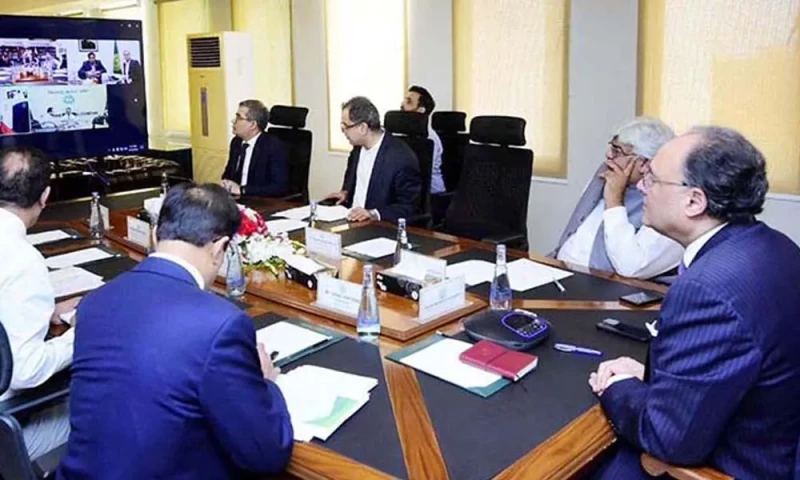
Pakistan and the UAE have reaffirmed their commitment to deepen strategic, economic, and defence cooperation, with a strong focus on trade, investment, and people-to-people ties. In a meeting in Islamabad, UAE Ambassador Salem Al Zaabi and Finance Minister Muhammad Aurangzeb discussed expanding Emirati investment in sectors such as ports, digital banking, logistics, technology, agriculture, and minerals, aligned with Pakistan’s shift toward an investment-driven, private-sector-led growth model. Al Zaabi also outlined new visa facilitation measures for Pakistanis, including online and e-visa systems and a dedicated visa centre, through which nearly 500 visas are now being processed daily to support business and visitor travel between the two countries
Read more
Pakistan’s Forex Reserves are Up—But Stability is Still Fragile
Pakistan's forex reserves have recovered significantly, but stability remains managed by external support (IMF, rollovers), not secured by self-sufficiency. The economy faces huge continuous strain from debt servicing (around $22B annually) and a large trade deficit ($35B projected). Stagnant exports and reliance on imports keep the situation vulnerable. To secure stability, Pakistan must prioritize structural reforms focused on reducing import dependency and aggressively boosting exports and remittances. The current calm is only a temporary "base camp."
Read more