Menu

Tag: Pakistan economy

FBR Uncovers Widespread Underreporting Among High-Net-Worth Individuals
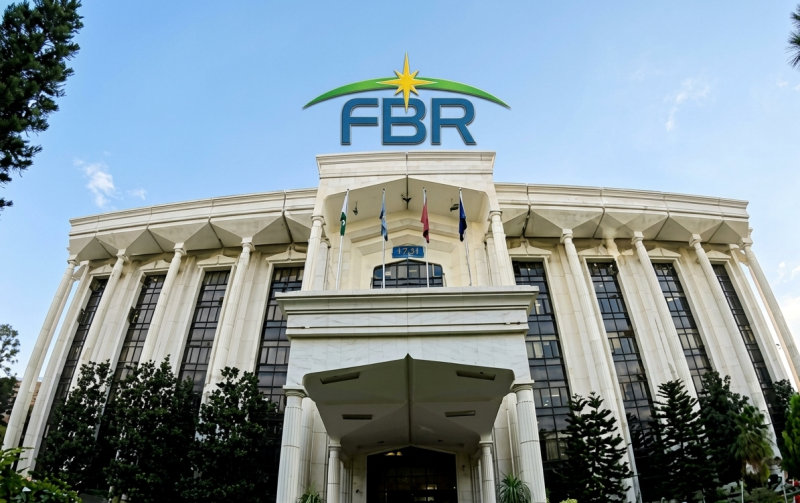
The Federal Board of Revenue (FBR) has uncovered significant tax underreporting among high-net-worth individuals and property buyers during its review of the Finance Bill 2026. Financial data analysis revealed that approximately 8,697 individuals held collective bank deposits of PKR 750 billion while reporting zero taxable income. Furthermore, nearly 80 percent of top property buyers materially underreported their bank deposits in tax filings, and 98.9 percent of high-deposit individuals failed to accurately report their financial inflows. In response, the FBR is working to strengthen data integration with the State Bank of Pakistan (SBP) to improve transaction monitoring and expand the tax base. Meanwhile, the Senate Standing Committee on Finance and Revenue has criticized past tax system "experiments," and the FBR has agreed to a proposed audit of policy actions taken over the last decade to help identify patterns of elite capture within the system.
Read more
Federal Budget FY2026–27 Government Plans 20 Percent Cut in Power Sector Subsidies
The government plans to reduce power sector subsidies by 20% in the FY2026–27 federal budget, bringing the total allocation to Rs 830 billion. This move, which aligns with IMF requirements to cap subsidies at 0.6% of GDP, aims to manage circular debt and improve sector efficiency. While overall subsidies are declining, allocations for K-Electric are projected to rise significantly, and the government is shifting its strategy toward targeted cash transfers for low-income consumers via the Benazir Income Support Programme (BISP) rather than broad cross-subsidies.
Read more
President Zardari Grants Assent to SEZ Amendment Bill 2026 to Boost Investment
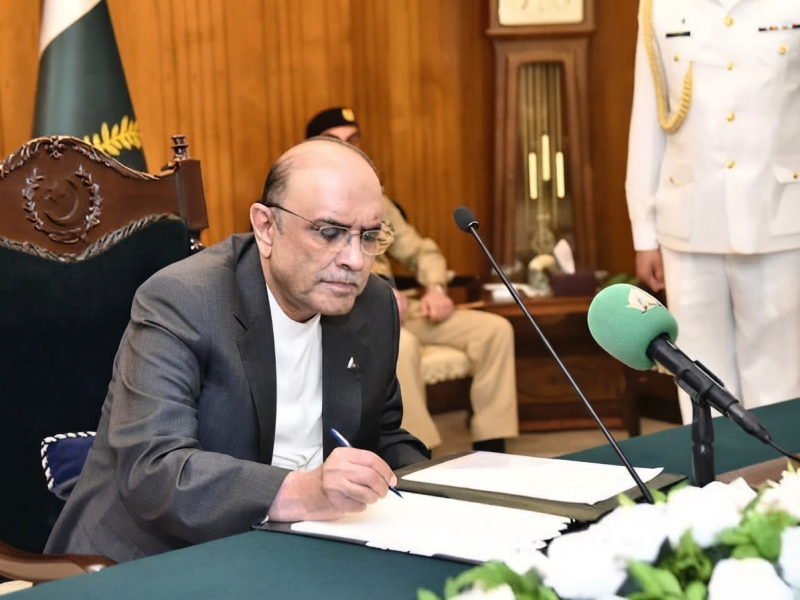
President Asif Ali Zardari has officially signed the Special Economic Zones (Amendment) Bill 2026 into law, aiming to bolster Pakistan’s investment climate and stimulate economic growth by streamlining business operations. The legislation introduces an expedited dispute resolution mechanism to support investors and mandates that federal and provincial governments provide essential infrastructure including electricity, gas, telecommunications, and road access to public sector SEZs within one year of their notification. Furthermore, the bill grants the Board of Investment the authority to extend similar government-funded infrastructure support to privately established SEZs on a case-by-case basis, provided they meet specific criteria set by the board.
Read more
Pakistan Invites Global Partners to Develop Strategic Oil Reserves at Gwadar Energy City
Pakistan is inviting oil-producing nations to build strategic oil reserves at a new Energy City near Gwadar Port to enhance energy security and regional trade. With active interest from Kuwait and ongoing discussions regarding Saudi investment, the project focuses on expanding storage and handling capacity for oil, LNG, and LPG. This initiative is a vital component of the government's "Hundred Years Vision 2047–2147," which aims to transform Pakistan into a key energy and maritime logistics hub.
Read more
Provinces Tasked With PKR 400Bn Tax Surge From Key Sectors
Under strict IMF program commitments, the federal government has directed Pakistan's four provinces to collectively generate over PKR 400 billion in additional tax revenue for FY 2026–27, primarily targeting the agriculture, services, and real estate sectors. Sindh and Punjab bear the brunt of the fiscal target, assigned PKR 200 billion and PKR 175 billion respectively, as part of a broader national strategy to mobilize over PKR 1.1 trillion globally through joint provincial-federal enforcement and expanded sales taxes. To ensure compliance, the FBR has initiated data-sharing protocols with the provinces, though historical challenges in collecting agricultural income tax remain a major hurdle.
Read more
IMF Board Set for May 8 Meeting to Greenlight $1.2 Billion Payout for Pakistan
The IMF Executive Board is scheduled to meet on May 8 to approve a $1.2 billion disbursement to Pakistan, following successful program reviews. This total includes $1 billion from the Extended Fund Facility (EFF) and $210 million from the Resilience and Sustainability Facility (RSF). While Pakistan has made significant progress in stabilizing its economy and meeting petroleum levy targets, the Fund continues to emphasize the need for phasing out fuel subsidies and broadening the tax base through digital reforms. The approval will bring total IMF disbursements under current arrangements to roughly $4.5 billion, providing a crucial boost to the country's foreign exchange reserves amidst global market volatility.
Read more
Saudi Arabia’s $2 Billion Lifeline Rescues Pakistan from Debt Pressure
Saudi Arabia has provided a critical $2 billion lifeline to the State Bank of Pakistan, offering essential relief as the country faces heavy debt repayments. This timely deposit helps bridge the gap for a $3.5 billion payment due to the UAE and follows a recent $1.43 billion Eurobond settlement. Beyond immediate cash, Riyadh has pledged an additional $3 billion and agreed to convert existing short-term deposits into long-term loans. This strategic support stabilizes the Pakistani Rupee, protects the nation’s credit rating, and ensures Pakistan meets the reserve requirements necessary to remain in the IMF program.
Read more
Pakistan’s IT Exports Hit Record $413 Million in March
Pakistan’s IT sector achieved a major milestone in March 2026, with exports climbing to $413 million, marking a 21% year-on-year increase. This growth brings cumulative exports for the fiscal year to $3.39 billion, driven by steady global demand and a stable domestic exchange rate. While the government is pushing toward a $5 billion annual goal, analysts project a year-end total of $4.5 billion. Under the ‘Uraan Pakistan’ initiative, the country aims to hit $10 billion in IT exports by 2029, relying on sustained policy support and digital service expansion to maintain an aggressive 27% annual growth rate.
Read more
PM Pushes Nationwide EV Adoption to Cut Fuel Costs
Prime Minister Shehbaz Sharif has urged provincial governments and law enforcement agencies to transition to electric vehicles to reduce Pakistan's reliance on expensive imported fuel. During a ceremony providing 15 eco-friendly EVs to the Islamabad Capital Traffic Police, the PM highlighted that shifting to electric mobility is essential for easing pressure on foreign exchange reserves and achieving long-term environmental sustainability. This initiative aligns with a broader energy conservation strategy, supported by upcoming plans for local EV manufacturing in Punjab.
Read more