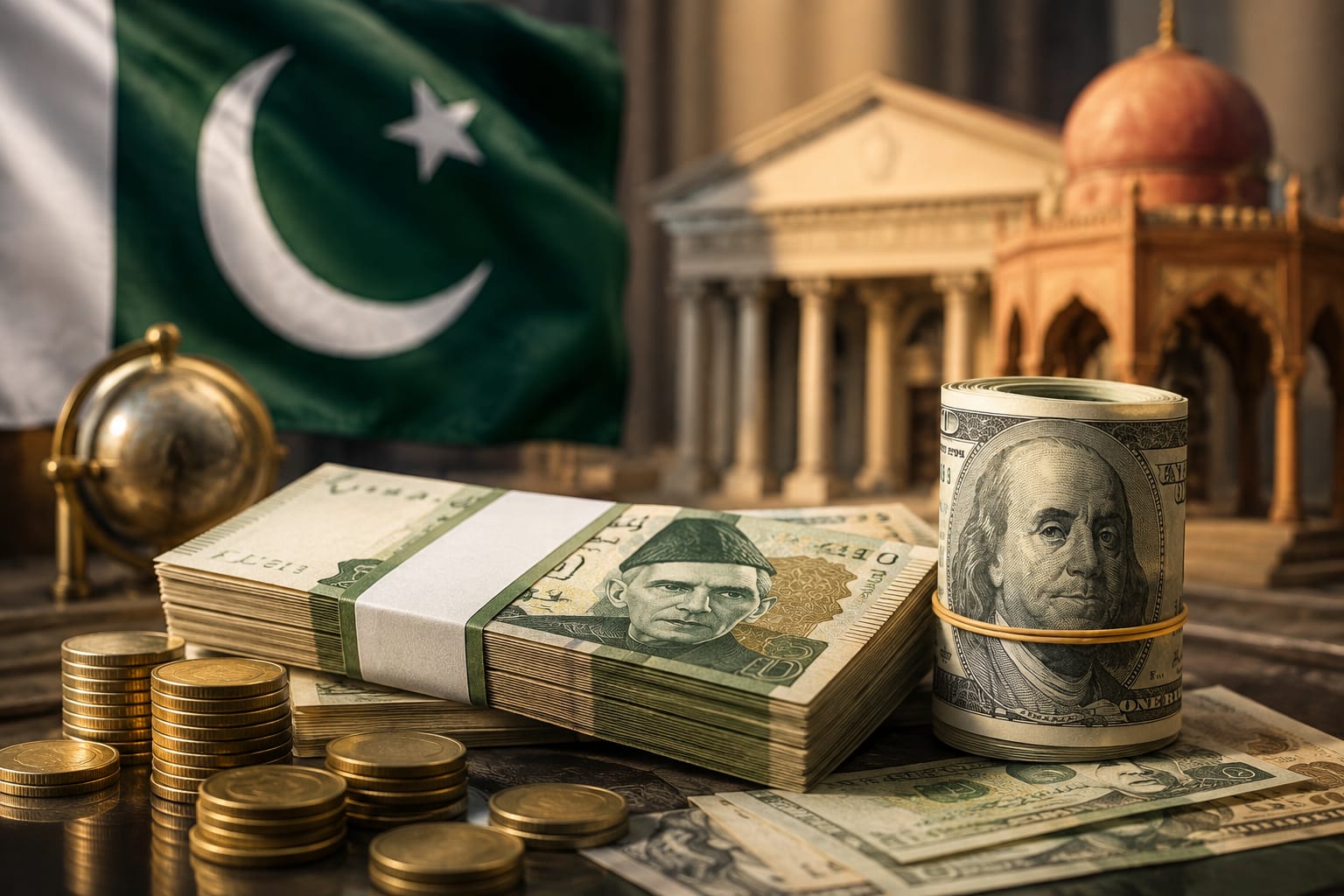
Pakistan is planning to issue a rupee-denominated, dollar-settled bond as the government seeks to diversify its borrowing sources, deepen capital markets and reduce reliance on the domestic banking system, Finance Minister Muhammad Aurangzeb said.
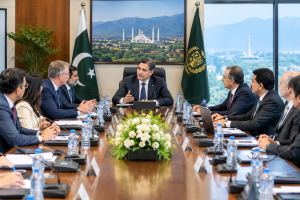
Speaking at an Asian Development Bank (ADB) event in Islamabad, Aurangzeb said financial institutions had already been mandated to work on the proposed bond. However, the government has not yet disclosed details about its size, maturity or issuance timeline.
The proposed instrument comes shortly after Pakistan successfully raised $3 billion through a dual-tranche Eurobond sale. The country secured $1.75 billion through a 5.5-year bond carrying a 7.5% coupon and another $1.25 billion through a 10-year bond at a 7.9% coupon.
The latest Eurobond transaction attracted nearly $6 billion in orders from institutional investors worldwide, highlighting strong international investor interest in Pakistan’s debt.
Aurangzeb said Pakistan’s continued dependence on banks for government borrowing was not sustainable and stressed the need to strengthen the country’s debt capital market and expand its investor base. The government is seeking greater participation from insurance companies, non-bank financial institutions and other institutional investors.
The Finance Ministry is also working to make government securities more accessible to retail investors. Aurangzeb said the ministry had partnered with JazzCash, while the State Bank of Pakistan had launched an application enabling individuals to invest directly in government securities.
Pakistan is also exploring innovative financing options, including the potential tokenisation of some existing Eurobond debt. Aurangzeb said the initiative was being considered in light of Hong Kong’s experience with tokenised bonds.
Meanwhile, Pakistan’s foreign exchange reserves stood at $18.4 billion as of June 30, with the government targeting $21 billion by the end of the current fiscal year. The target would provide more than three months of import cover, which the minister described as a key international benchmark.
The government is also closely monitoring geopolitical developments, including the US-Iran conflict, for their potential impact on Pakistan’s economic growth and inflation outlook.