Menu

Lifestyle

Sindh Warns of 75,000 Cusec Shortfall as WAPDA Misses Tarbela Deadlines
The escalating water crisis in Sindh is reaching a critical tipping point as the province warns of a massive 75,000 cusec shortfall during the early Kharif sowing season. Irrigation Minister Jam Khan Shoro has formally alerted the federal government to "persistent delays" in WAPDA’s infrastructure projects at Tarbela Dam, specifically the deferred testing of the Tunnel-4 Low-Level Outlet (LLO) until May 2026. This technical bottleneck, combined with essential maintenance at the Tunnel-4 powerhouse, effectively traps water in the reservoir during the peak demand window for water-intensive crops like rice and cotton. With WAPDA and the regulator (IRSA) also at odds over reservoir storage levels 1,480 feet versus 1,520 feet—Sindh faces a repeat of last year’s devastating agricultural losses due to man-made operational constraints.
Read more
PM Sharif Rallies Pakistan for 'Shared Sacrifice'
In a high-stakes bid to stabilize Pakistan’s economy against a backdrop of regional tension, Prime Minister Shehbaz Sharif has convened a rare assembly of political and military leadership to launch a rigorous nationwide austerity drive. Emphasizing that the country’s elite must lead by example, the Prime Minister announced aggressive federal cuts including salary waivers, a 50% reduction in fuel usage, and the redirection of PKR 100 billion toward relief efforts while urging provinces to abandon non-essential projects. This unified front, supported by both the military and major political allies, aims to mitigate the "public hardship" caused by rising petroleum costs while simultaneously pursuing diplomatic channels to secure regional peace and safeguard critical sectors like agriculture from inflationary shocks.
Read more
PM Rolls Out "Precision Subsidies" to Combat Record Fuel Costs
To mitigate the impact of a record-breaking fuel price hike which saw petrol and diesel surge by PKR 137.24 and PKR 184.49 per litre respectively the federal government has launched a multi-sector "precision subsidy" package. This targeted relief effort prioritizes the country’s most vulnerable, offering motorcycle owners a PKR 100 per litre discount (capped at 20 litres monthly) and providing substantial monthly stipends to public and goods transport operators to prevent a secondary spike in travel fares and grocery prices. Furthermore, the plan extends support to the agricultural backbone with a one-time PKR 1,500 per acre grant for small farmers, signaling a strategic shift toward data-driven, tiered assistance rather than unsustainable blanket subsidies as the government navigates global energy volatility.
Read more
PM Assures Stable Fuel Stocks
Prime Minister Shehbaz Sharif has assured the nation that Pakistan maintains sufficient petroleum reserves despite global supply chain disruptions caused by the escalating Middle East conflict. To mitigate the economic pressure of rising international oil prices, the government has reallocated Rs 125 billion from the development budget to subsidize fuel costs and is developing a digital, app-based relief program specifically for motorcycle and rickshaw drivers. While the PM credited "timely government decisions" for avoiding the fuel shortages seen in other countries, he urged citizens to adopt conservation measures, such as teleconferencing and reduced travel, to protect the national economy from further inflationary strain.
Read more
Kitchen Budgets Under Strain as Essential Commodity Prices Surge
A recent market survey by Business Recorder reveals a sharp spike in the cost of essential kitchen commodities, leaving consumers struggling as prices for meat, vegetables, and grains reach record highs. While poultry and beef prices remain steep—with mutton hitting up to Rs 3,000 per kg—the produce market has seen significant volatility, notably with onions and ginger seeing substantial markups. Despite minor stabilizations in sugar and flour prices, public frustration is mounting over the perceived lack of government oversight regarding artificial price hikes by vendors. This inflationary trend has also trickled down to the service sector, with local eateries and bakeries raising prices on cooked food and bread, further squeezing the budgets of average households.
Read more
Pakistan Unveils Hybrid ‘Survival Plan’ as Power Crisis Looms
To navigate a severe summer energy shortfall exacerbated by the Middle East crisis, the Pakistani government is implementing a "hybrid" survival plan involving scheduled load-shedding, mandatory conservation, and significant tariff hikes. With LNG and imported coal supplies which typically provide half of the nation's power facing near-zero availability, the grid is forced to rely on furnace oil-based generation, which has seen costs double to Rs35 per unit. This shift, combined with internal bureaucratic friction between Pakistan Railways and key coal power plants, threatens to add Rs10–12 per unit in fuel cost adjustments for consumers. To prevent a total collapse, the strategy includes diverting gas from the CNG and fertilizer sectors to the power grid and enforcing two to three hours of daily load-shedding as a "contingency valve" against the astronomical Rs80 per unit cost of diesel-based generation.
Read more
Port Qasim Hits Record Fuel Handling Amid Gulf Crisis
Following the closure of the Strait of Hormuz, Port Qasim has seen a record spike in activity, handling 450,000 tonnes of petroleum and LPG in March 2026 alone. Despite the ongoing regional conflict, Pakistan’s sea-based fuel supply remains stable, aided by the implementation of night navigation and modernized terminal systems that have prevented congestion. This shift has also boosted transshipment volumes, as international shipping lines increasingly reroute toward Pakistan to bypass the volatile Persian Gulf.
Read more
Pakistan Relaxes Border Trade Rules with Iran to Bypass Maritime Turmoil
In response to the volatile maritime security situation in the Gulf, Pakistan has issued a three-month waiver on mandatory banking instruments for the export of essential food and medicines to Iran via land routes. This exemption, running until late June 2026, also facilitates the transit of rice to Central Asian markets, effectively bypassing disrupted sea lanes. By combining these regulatory relaxations with the opening of new customs stations like Jeerak, the government aims to sustain bilateral trade and formalize border commerce despite the ongoing challenges of international sanctions and regional conflict.
Read more
PM Accelerates Housing Reforms to Unlock Investment and Jobs
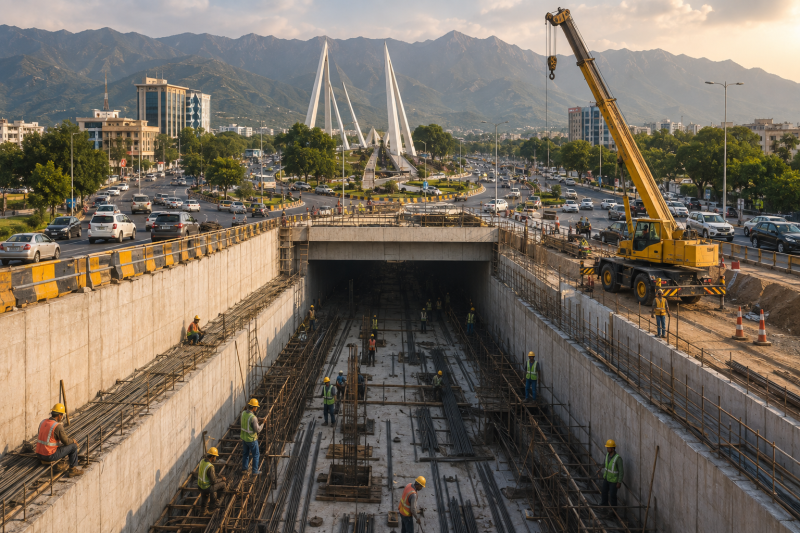
Prime Minister Shehbaz Sharif has launched a comprehensive legislative and financial overhaul of the housing sector, positioning construction as a primary engine for national economic growth and job creation. The reforms focus on establishing a robust mortgage ecosystem including bank-led credit targets and developer-led financing models to make homeownership accessible for low-income citizens and the middle class. By finalizing tax-incentivized property plans and offering sovereign-backed protections, the government aims to tap into significant investment from overseas Pakistanis and foreign institutional investors, ultimately triggering a multiplier effect across forty allied industries to stimulate large-scale employment.
Read more