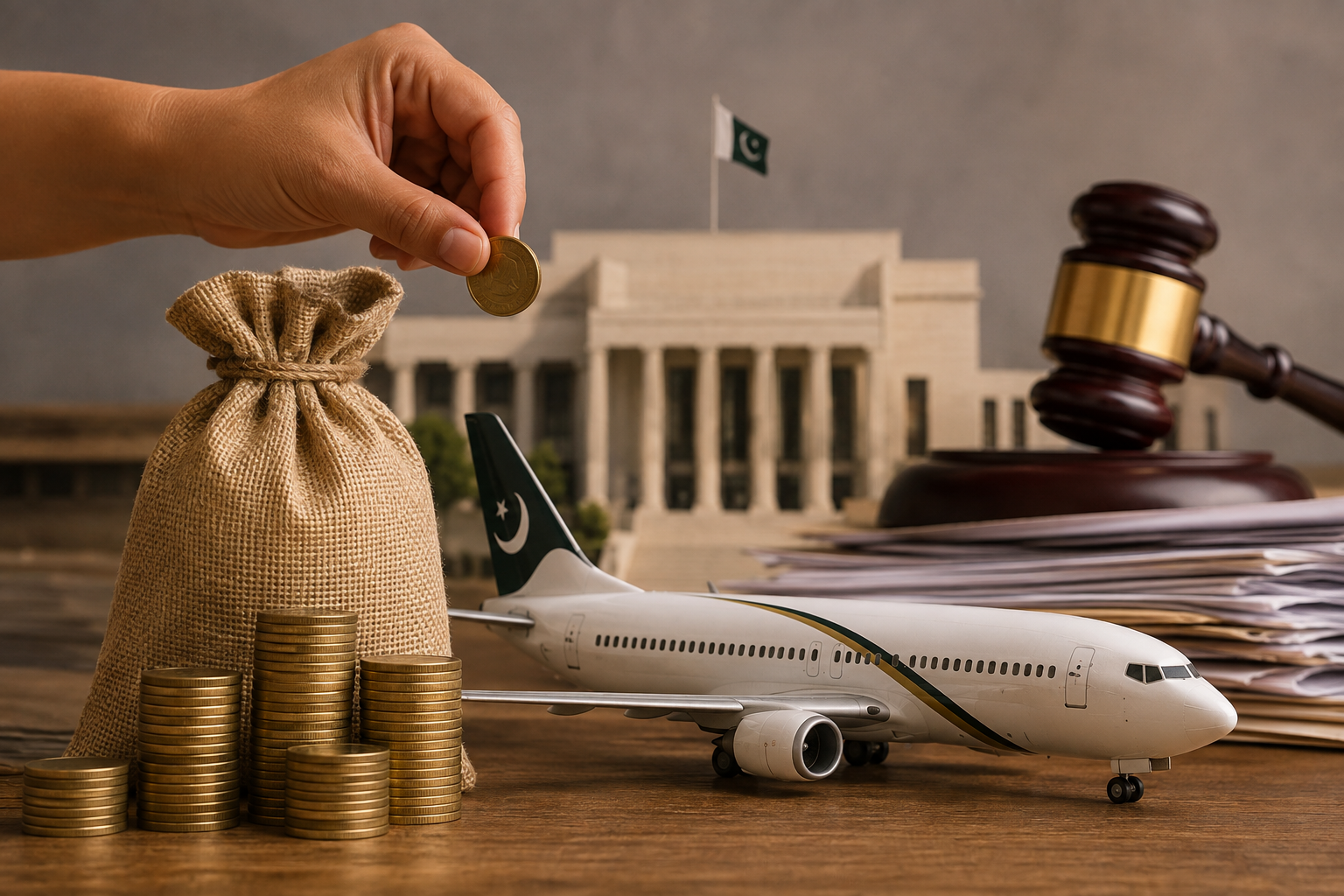
The government has allocated Rs73 billion for privatisation-related contingencies, including around Rs30 billion to cover interest payments on legacy debt of Pakistan International Airlines (PIA) during the current fiscal year. The allocation comes as the government moves forward with its broader privatisation programme and plans to extend sales tax exemptions to all locally operated airlines.
Rs30 Billion PIA Debt Interest Burden
Government records show that taxpayers will bear Rs30 billion in interest costs on Rs268.5 billion of PIA debt during the current fiscal year. The debt was transferred to the PIA Holding Company ahead of the airline's privatisation.
The annual interest payment is significantly higher than the Rs10 billion in immediate cash proceeds received by the government from the sale of a 75% stake in PIA. The total bid value was Rs135 billion, with Rs10 billion paid to the government and the remaining amount committed for investment in the airline. The remaining 25% stake is also set to be sold to the same bidders for Rs45 billion in cash.
A Finance Ministry official said the Rs73 billion contingency allocation would cover unforeseen costs associated with the privatisation of three power distribution companies as well as interest payments on PIA's legacy debt.
The ministry is providing the interest amount to PIA Holding Company as a loan. Since the holding company has no independent revenue stream, officials expect the loan to eventually be settled through the sale of its hotel assets.
PIA Debt Shifted to Public Accounts
In 2024, the PIA Holding Company board approved the restructuring of around Rs268 billion in commercial debt, transferring it into public debt. Banks agreed to extend the repayment period to 10 years at an annual interest rate of 12%.
Under the arrangement, the government could end up paying approximately Rs573 billion to banks over 10 years, including more than Rs300 billion in interest payments. The restructuring has therefore created a continuing financial burden that requires annual budgetary allocations.
The Finance Ministry said the Rs73 billion contingency fund is intended to meet liabilities arising from the privatisation or winding up of public sector entities. Other planned transactions, including the winding down of the Pakistan Agriculture Storage and Services Corporation (PASSCO), could also require funding for legacy liabilities.
Sales Tax Exemption Extended to Airlines
Meanwhile, the government has decided to extend sales tax exemptions to all locally operated airlines from fiscal year 2027-28, aiming to create a level playing field across the aviation sector.
The decision follows concerns raised by the National Assembly Standing Committee on Finance over preferential tax treatment granted to PIA following its privatisation. The government had earlier approved an 18% sales tax exemption for PIA on aircraft procurement and leasing for 15 years.
Privatisation Commission Secretary Usman Bajwa told the National Assembly Standing Committee on Privatisation that the exemption would be extended to other airlines from July 2027 for a period of 15 years. Officials also said the government had taken the International Monetary Fund (IMF) into confidence over the decision.
DISCO Privatisation Moves Forward
The committee also reviewed plans to privatise three power distribution companies — FESCO, IESCO and GEPCO — during the first phase of the process. The government is offering between 51% and 100% shares to private investors.
The deadline for expressions of interest for GEPCO has been set for August 21, while bidding for the first three profitable distribution companies is expected in December 2026.
Officials acknowledged that the DISCOs have legacy losses and balance-sheet issues that need to be addressed before final asset valuations are determined. The committee also recommended a performance audit of the distribution companies and called for employee protection measures during the privatisation process.
The developments highlight the government's efforts to accelerate privatisation while managing the legacy financial liabilities of state-owned enterprises, with taxpayers continuing to shoulder significant debt-servicing costs associated with PIA.