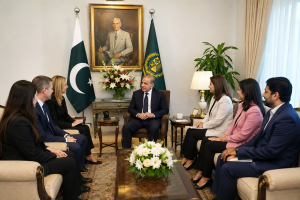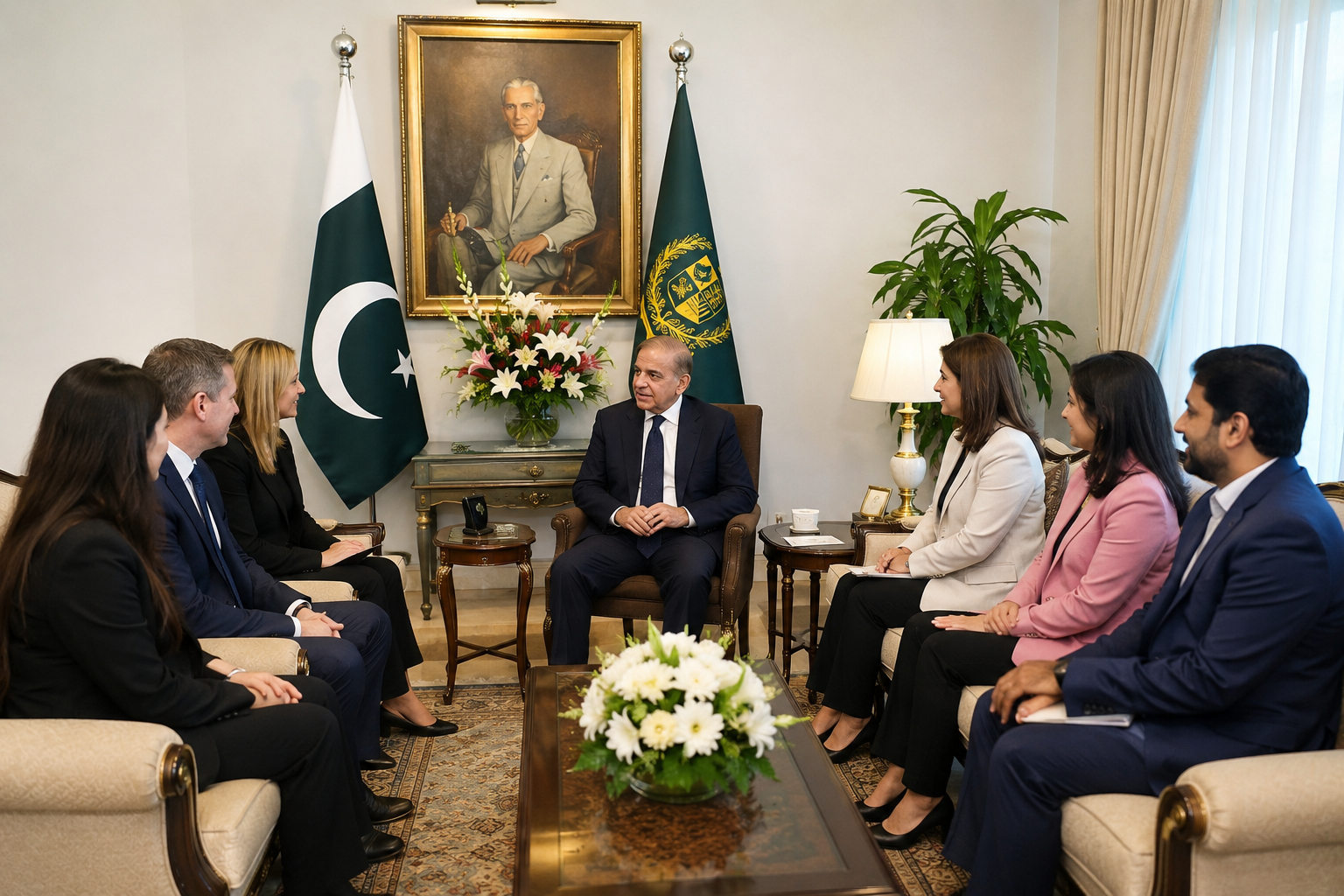
Prime Minister Shehbaz Sharif on Tuesday met a nine-member delegation from Google as the technology giant formally inaugurated its local office in Pakistan, marking a significant development in the country’s digital transformation and technology sector.
The inauguration ceremony was held at the Prime Minister’s House in Islamabad, where PM Shehbaz highlighted the growing potential for cooperation between Pakistan and Google in technology, digital governance, artificial intelligence and IT development.
Pakistan Eyes Stronger Google Partnership
Speaking at the ceremony, Prime Minister Shehbaz Sharif said there was significant scope to expand Pakistan’s partnership with Google. He noted that the company’s arrival in Pakistan came at a crucial time as the country undergoes a major digital transformation covering government services, the economy and other sectors.
The prime minister briefed the Google delegation on the government’s “Digital Nation Pakistan” vision and reaffirmed its commitment to modernising the country’s IT infrastructure.
He also highlighted government initiatives aimed at training young Pakistanis in IT and artificial intelligence, saying the country’s large youth population could play a key role in transforming Pakistan’s economic prospects.
PM Shehbaz described the inauguration as a “great day” for the Pakistan-Google partnership and said modern technology would be used to empower the country’s youth and accelerate digital development.
Google Backs Pakistan’s $30 Billion IT Export Ambition
Google Vice President of Government Affairs and Public Policy Wilson L. White said the company had been investing in Pakistan and working with local stakeholders for more than a decade.
White said opening a local Google office was a special milestone and noted that the company’s objectives aligned with Pakistan’s ambition to become a $30 billion IT export hub.
According to White, Google’s activities over the past decade have contributed more than Rs3.9 trillion in economic activity for Pakistani businesses and households and supported more than 960,000 jobs.
He said Google would continue supporting Pakistan’s technology ambitions by investing in people, hardware manufacturing and local businesses.
Google to Upskill One Million Pakistanis
White highlighted Google’s efforts to prepare Pakistan’s workforce for the digital economy. He said the company had helped upskill one million Pakistanis through career certificates and initiatives involving schools and teachers.
He stressed that Pakistan’s digital transformation would depend on developing the skills needed for the future economy.
Google is also working with local partners on a Chromebook assembly line in Pakistan, which White said could create significant opportunities for exporting locally assembled devices to other regional markets.
Free Google Gemini Subscriptions for Students
Google also plans to announce a major initiative for Pakistani students, with free Google Gemini subscriptions for one year expected to be offered to students later this week.
The initiative could provide students with greater access to artificial intelligence tools and support Pakistan’s efforts to expand digital and AI skills among its young population.
Chromebook Manufacturing Expands Pakistan’s Tech Sector
Google’s engagement with Pakistan also includes local Chromebook manufacturing. The project was launched in Haripur in collaboration with the Ministry of Defence Production, the National Radio and Telecommunication Corporation and a local private-sector partner.
Federal Minister for IT and Telecommunication Shaza Fatima Khawaja had previously said Google was expected to manufacture around 600,000 Chromebooks annually in Pakistan.
The manufacturing initiative is viewed as an important step toward strengthening Pakistan’s IT hardware industry, technology exports and local digital manufacturing capacity.
With the inauguration of Google’s Pakistan office, the government hopes to deepen cooperation with the global technology company and accelerate progress toward its broader goals for digital transformation, IT exports, AI development and youth skills.