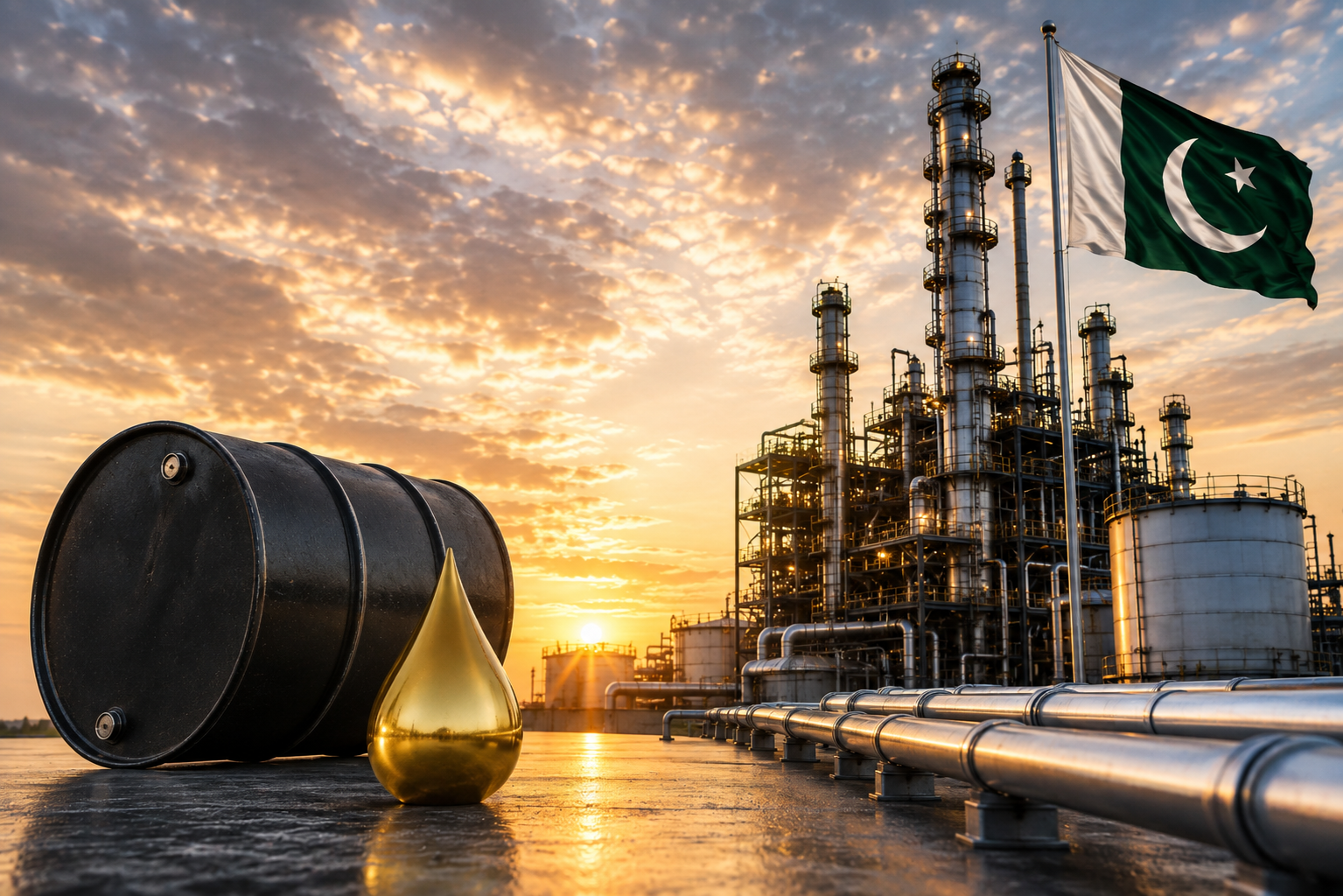
Pakistan has officially approved the long-awaited Brownfield Refining Policy, ending a six-year delay and paving the way for nearly $6 billion in investments to modernize the country's existing oil refineries. The landmark policy is expected to transform Pakistan's refining sector by improving fuel quality, increasing domestic production of petrol and diesel, reducing furnace oil output, and strengthening the country's long-term energy security.
The policy provides a comprehensive framework for upgrading all five existing oil refineries, enabling them to produce cleaner Euro-V standard fuels that meet international environmental and quality standards. The shift to Euro-V fuels is expected to significantly reduce harmful vehicle emissions, improve air quality, and align Pakistan's petroleum sector with global fuel specifications.
A major objective of the policy is to increase the country's refining capacity and reduce reliance on imported petroleum products. Under the proposed upgrades, petrol production is projected to increase by 72%, rising from 10,700 tonnes per day (TPD) to 18,400 TPD. High-Speed Diesel (HSD) production is also expected to grow by 39%, reaching 29,520 TPD. At the same time, furnace oil production will decline by 63%, reflecting the government's strategy to shift towards cleaner and more valuable petroleum products.
To encourage investment, the government has introduced a range of fiscal and regulatory incentives designed to provide certainty for refinery operators. These include investment protection measures, stability clauses, tax incentives, and permission to maintain foreign currency accounts for refinery upgrade projects.
As part of the policy, refineries will receive 10% tariff protection on imported petrol and diesel for a period of seven years, allowing investors to recover modernization costs while remaining competitive. In addition, machinery and equipment imported specifically for refinery upgrades will be exempt from sales tax, reducing the overall cost of investment.
The policy also allows refineries to export surplus petroleum products after meeting domestic demand, subject to approval from the Oil and Gas Regulatory Authority (OGRA). To strengthen the national fuel supply chain, binding agreements between refineries and Oil Marketing Companies (OMCs) will be introduced, ensuring a more reliable and efficient distribution system across the country.
Another key feature of the policy is its focus on energy security. Upgraded refineries will be required to maintain larger crude oil inventories, helping Pakistan build greater resilience against supply disruptions and fluctuations in global energy markets.
To ensure transparency and timely implementation, refinery upgrade projects will be monitored through independent auditors and third-party evaluations. The government has also incorporated legal safeguards to protect investors from adverse regulatory or fiscal changes that could affect project viability during the investment period.
Under the policy, refinery operators must sign Upgrade Agreements with OGRA within 90 days to qualify for the fiscal incentives and investment protections offered by the government.
The approval of the Brownfield Refining Policy marks a significant milestone for Pakistan's energy sector. By modernizing existing refineries, increasing domestic fuel production, and producing cleaner Euro-V fuels, the policy is expected to reduce dependence on imported refined petroleum products, strengthen the country's energy infrastructure, attract substantial private investment, and support long-term economic growth. Industry experts believe the initiative will also improve environmental performance through lower emissions while enhancing Pakistan's overall energy security and fuel supply reliability.