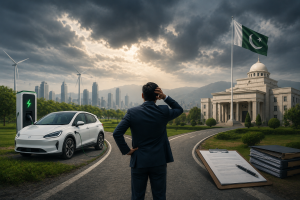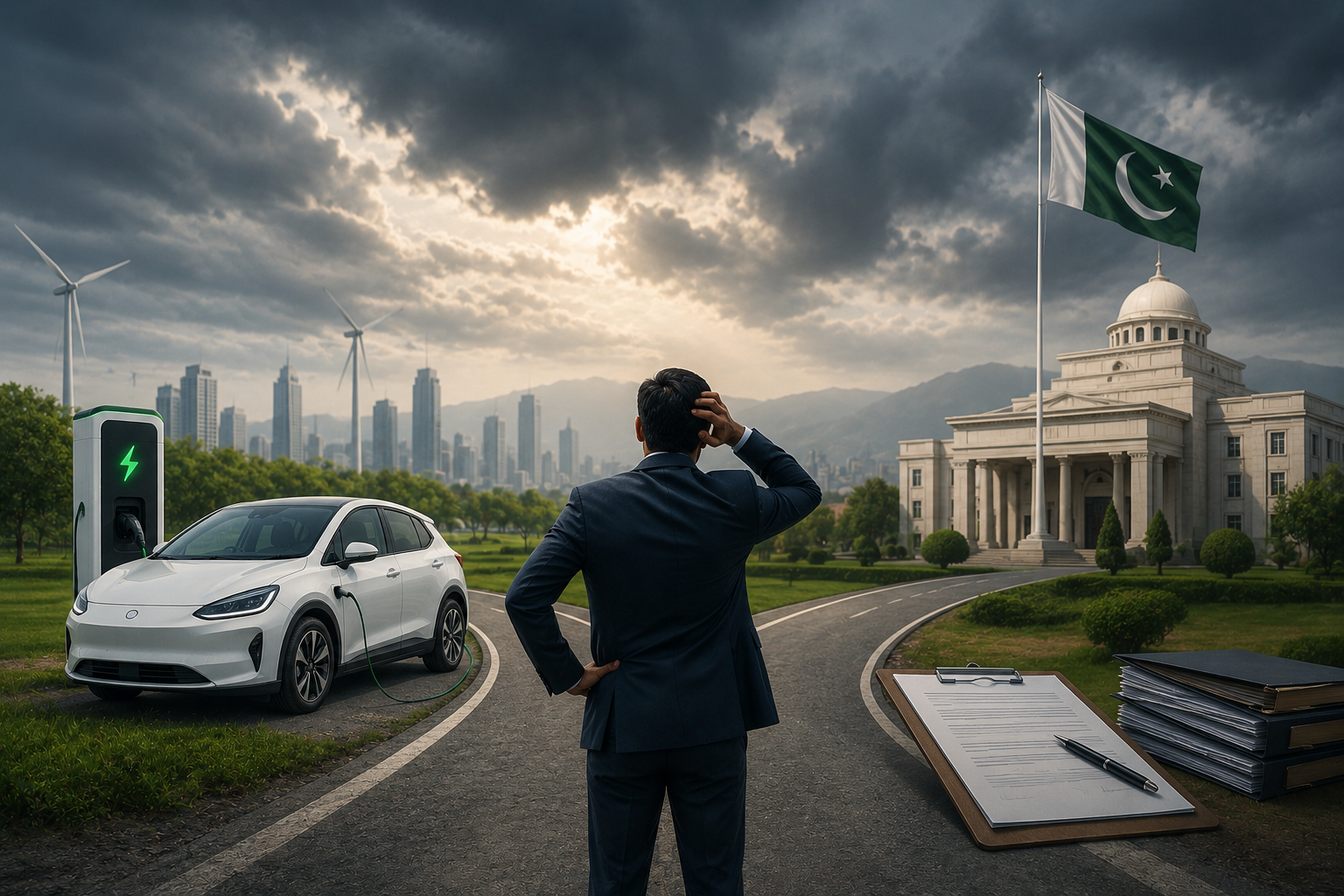
Pakistan’s electric vehicle (EV) market is gaining momentum, but industry stakeholders and policy experts are urging the government to ensure policy continuity and predictability as it reviews the country’s automotive policy.
They warn that prolonged uncertainty over future incentives, regulations and investment policies could undermine consumer confidence, delay vehicle purchases and discourage investment in local EV assembly and manufacturing.
Policy Alignment Needed for EV Growth
As Pakistan works to accelerate the transition towards cleaner transportation, experts believe the next automotive policy should be closely aligned with the National Electric Vehicle (NEV) Policy 2025-30.
They argue that consistent objectives, incentives and timelines would provide greater clarity to consumers and businesses while supporting the government's broader goals for electric and new-energy vehicles.
EV Buyers Need Greater Policy Certainty
Danish Khaliq, Vice President Sales and Strategy at BYD, said policy certainty is particularly important for consumers because purchasing a vehicle represents a major financial decision.
He noted that Pakistan's automotive industry has spent the past three years rebuilding market confidence, with the growing availability of electric vehicles and new-energy vehicles (NEVs) playing an important role in the recovery.
According to Khaliq, EVs offer consumers benefits including advanced technology, lower fuel costs and improved value, helping drive interest in cleaner mobility.
However, he warned that prolonged uncertainty surrounding the country's auto policy could cause consumers to delay vehicle purchases, potentially slowing the industry's current momentum.
A clear and forward-looking policy framework, he said, would give consumers greater confidence to invest in cleaner transportation while supporting a more affordable and energy-efficient mobility system.
Long-Term Policy Clarity Crucial for Investors
Policy predictability is also considered essential for investors planning local vehicle assembly and manufacturing facilities. Such investments typically require several years to mature and depend on stable regulatory and fiscal conditions.
Industry experts acknowledge that automotive policies must evolve as market conditions and technologies change. However, they argue that any changes should provide investors with sufficient long-term visibility.
They have also called for proposed policy changes to be assessed carefully for their potential impact on existing investments and future manufacturing projects, rather than introducing abrupt shifts that could create uncertainty.
Pakistan’s EV Transition Faces a Critical Policy Test
The government's review of its automobile policy comes at a crucial stage for Pakistan's automotive sector. Maintaining consistency between the broader auto policy and the NEV Policy 2025-30 could help strengthen investor confidence, encourage local manufacturing and sustain demand for electric vehicles.
For Pakistan's EV transition to gain lasting momentum, stakeholders say stable policies, clear incentives and predictable regulations will be key to encouraging both consumers and investors to commit to cleaner mobility.