In a move that signals economic pragmatism over bureaucratic rigidity, Pakistan’s Commerce Ministry has suspended one of its most stringent export regulations. For a three-month window—March 24 to June 21, 2026—exporters are no longer required to provide bank-cleared financial instruments for goods entering Iran or transiting through to Central Asia.
This temporary "amnesty" from Para 3 of the Export Policy Order 2022 is a direct response to the deepening trade paralysis on Pakistan’s western borders.
The Friction: Why the Waiver Matters
Historically, Pakistan has treated the Pak-Iran border as a high-risk zone for "forex leakage." To combat this, the State Bank of Pakistan (SBP) mandated that all exports be backed by Letters of Credit (LCs) or advance payments.
However, this created an impossible hurdle:
-
Banking Void: Due to international sanctions, no functional banking corridor exists between Islamabad and Tehran.
-
Barter Limits: While a barter trade mechanism was launched in 2023, it proved too cumbersome for high-volume, institutionalized exporters.
-
The Perishables Problem: For exporters of seafood, meat, and citrus, the time spent chasing "bank-compliant" paperwork often meant their cargo rotted before it reached the market.
What’s Moving? The New Trade Basket
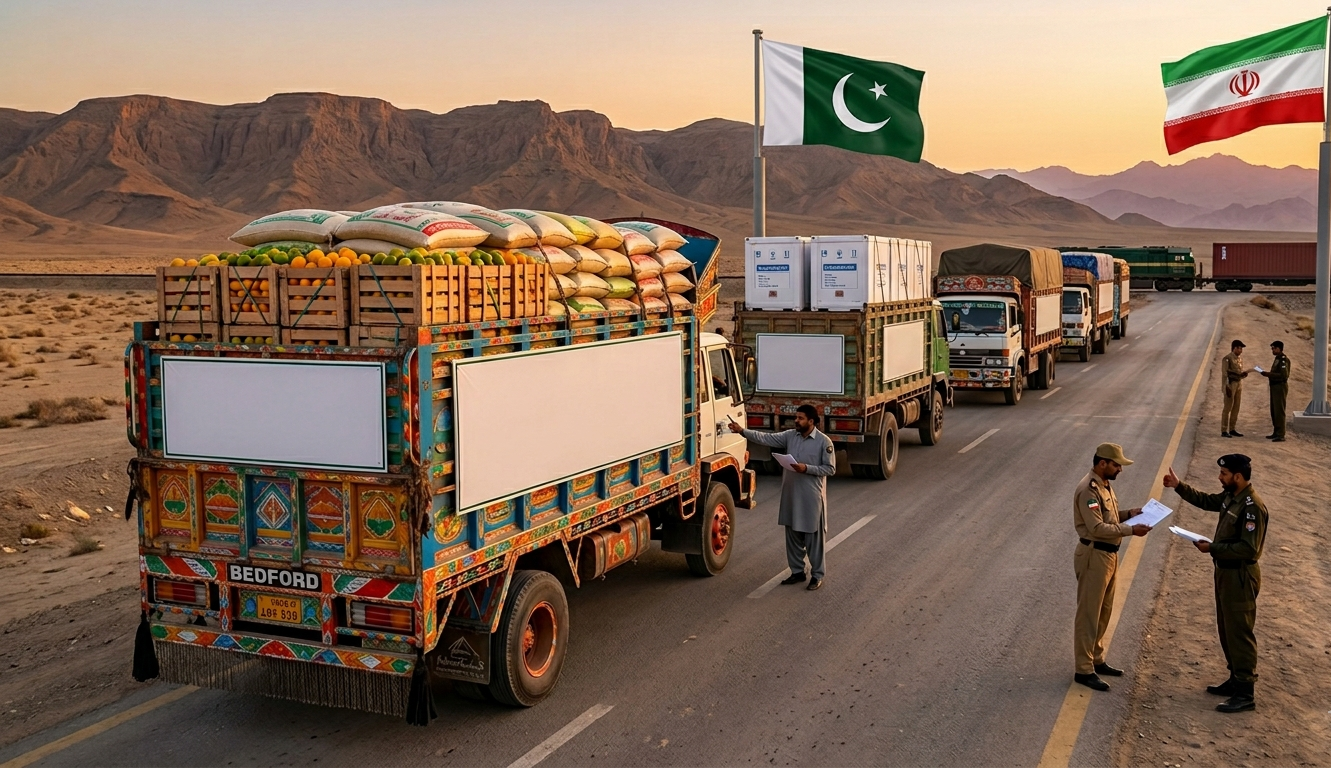
The waiver isn’t a blanket policy; it targets essential commodities and manufactured goods that are currently in high demand in a war-stressed Iranian market.
-
To Iran: Meat, seafood, potatoes, onions, maize, citrus, bananas, tomatoes, frozen chicken, pharmaceuticals, and tents.
-
To Central Asia/Azerbaijan: Primarily rice, utilizing Iran’s land routes as a bypass for the volatile Afghan corridor.
The "Afghan Factor" & Economic Reality
The urgency behind this decision is backed by sobering data. Since the escalation of border tensions and the partial closure of the Torkham gateway, Pakistan’s regional trade has "fallen like dominoes":
The Data Drop: > * Exports to Afghanistan: Collapsed by 56% ($505.8M down to $219.5M) in the latter half of 2025.
Central Asian Trade: Fell by nearly 10% year-on-year in early FY26.
With Afghanistan aggressively diversifying its own trade through Iran’s Chabahar Port, Pakistan risks being geographically sidelined. By easing rules on the Iranian route, Islamabad is fighting to remain a relevant transit hub.
A Test Case for Autonomy
This move is more than just a temporary relief valve; it is a proof of concept. For years, Pakistan’s export rules have been tethered to Western-influenced financial systems that don't align with the realities of its neighbors.
The next three months will determine:
-
If Iran can replace Afghanistan as a reliable transit corridor.
-
If Pakistan can trust its exporters to repatriate funds without a bank-guaranteed "leash."
-
Whether "informal" trade can be successfully brought into a semi-formal fold.
The Verdict
While this policy helps "get the wheels rolling," it exposes a deeper flaw: Pakistan’s tax and compliance frameworks are consistently held hostage by geopolitical volatility. If this experiment fails to show a spike in monthly trade data, the government will face the uncomfortable reality that its export rulebook may need a permanent, radical rewrite.