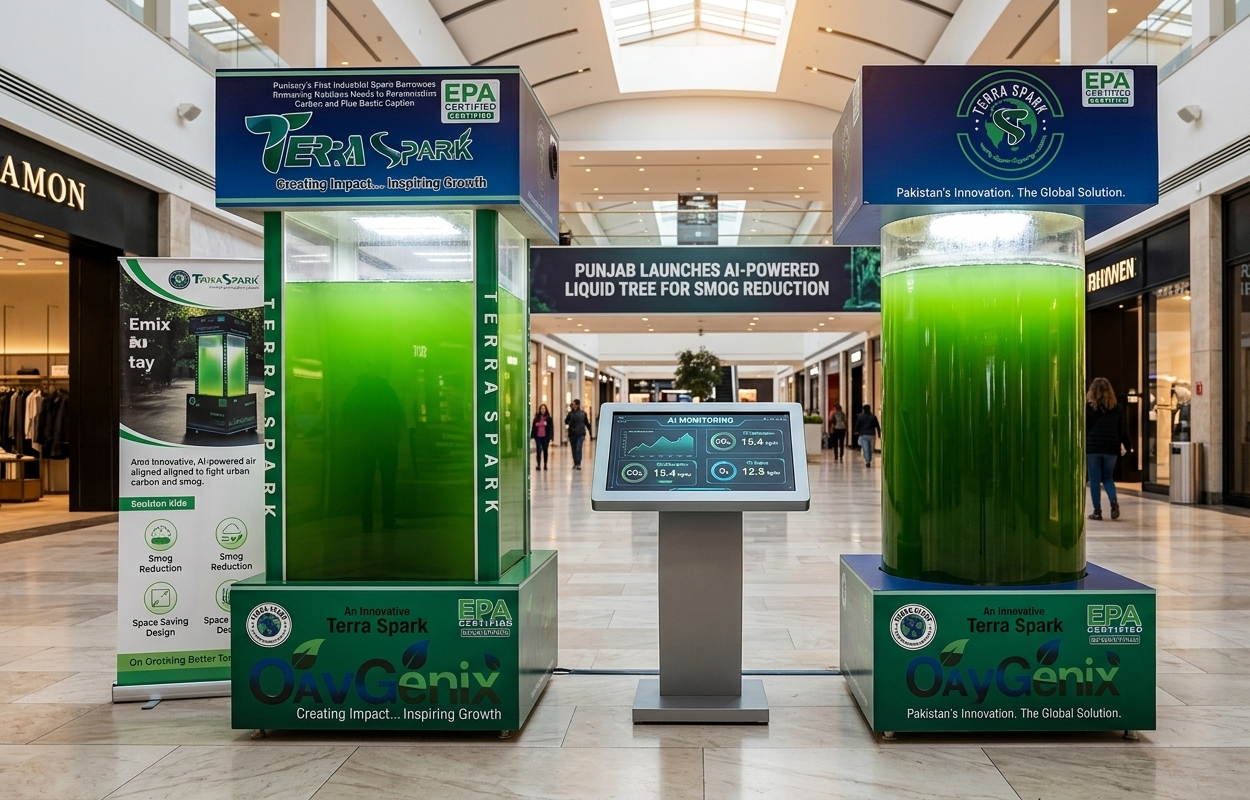
In a significant move to tackle worsening air quality, Punjab Chief Minister Maryam Nawaz Sharif has introduced Pakistan’s first Environment Protection Agency (EPA)-certified "Liquid Tree." This innovative bio-artificial solution utilizes advanced bioreactor technology to actively reduce carbon emissions and enhance oxygen levels in densely populated urban centers.
How the "Liquid Tree" Works
-
Algae-Based Technology: The system functions as a bioreactor, utilizing specialized microalgae to absorb carbon dioxide and release fresh oxygen.
-
Research-Driven Development: The project followed seven months of rigorous scientific research, where experts tested over 100 species of microalgae from across the country to determine the best candidates for carbon absorption.
-
Indigenous Innovation: The most efficient algae species was identified in Sukkur and subsequently cultivated with the academic support of Government College University (GCU) Faisalabad.
-
AI Integration: Each unit is equipped with artificial intelligence that provides real-time data monitoring on carbon sequestration and oxygen output, ensuring continuous performance tracking.
Implementation and Strategic Goals
-
Urban Deployment: In the initial phase, these systems will be installed in both indoor and outdoor settings at major shopping malls, with broader expansion plans to follow.
-
Complementary Solution: While not a replacement for traditional forests, the technology is designed to provide a highly effective alternative in congested urban areas where large-scale tree planting is physically constrained.
-
Environmental Agenda: This initiative is a core component of the Punjab government’s broader strategy, which includes ongoing anti-smog crackdowns, massive afforestation campaigns, and the adoption of modern, climate-resilient technologies.