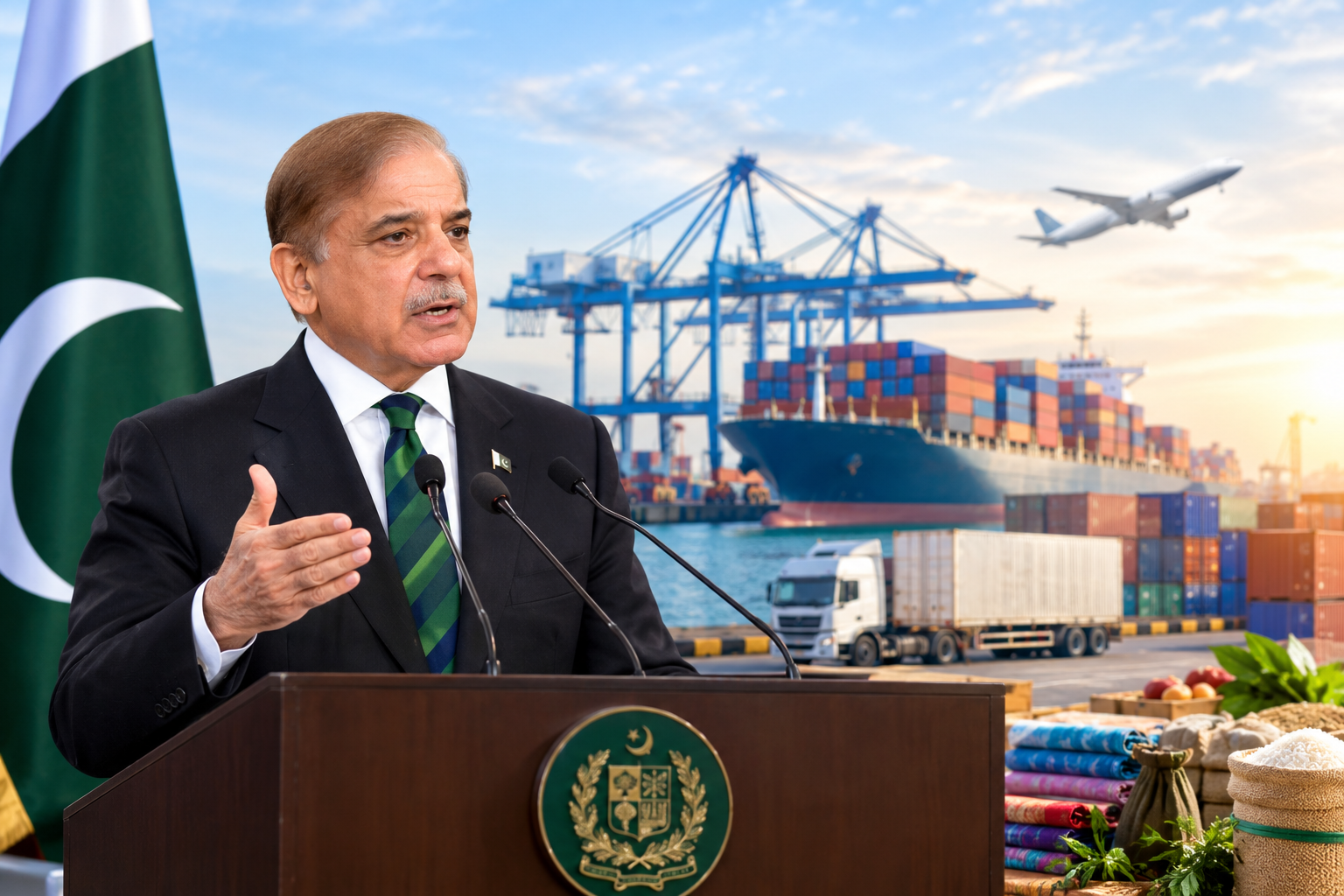
Prime Minister Shehbaz Sharif has reiterated that Pakistan’s long-term economic objective is to build an export-led growth model, with the private sector playing a central role in driving economic activity. He made the remarks while addressing the gong-striking ceremony for the listing of Naya Nazimabad Apartments REIT at the Pakistan Stock Exchange (PSX).
The prime minister said incentives provided to the construction sector in the federal budget were beginning to deliver results, particularly in Karachi. However, he noted that several industrial sectors had received government subsidies since the 1960s without making a significant contribution to exports. According to him, the prolonged support had contributed to higher commodity prices, weaker quality and productivity, and limited progress in import substitution.
PM Shehbaz urged exporters and the private sector to play a stronger role in promoting sustainable, export-driven economic growth. He also highlighted recent developments in Pakistan’s foreign exchange reserves, remittances, Eurobond issuance and industrial incentives, while stressing the need for further reforms in the capital market.
Finance Minister Muhammad Aurangzeb said Pakistan’s economic growth was projected to reach 4% in 2027, compared with 3.7% in the previous year. He said although consumption-led growth could raise economic activity more quickly, it could also increase balance-of-payments pressures and contribute to another boom-and-bust cycle.
Aurangzeb said the government was therefore pursuing an export-led and sustainable growth strategy, with a 4% growth target for the current year. He also highlighted a 45% increase in tax filers to more than 5.7 million and said reforms were underway to strengthen the tax system and capital markets.
The finance minister further said Rs60 billion had been disbursed under the Prime Minister’s Apna Ghar Programme, while banks had approved Rs340 billion in financing. He stressed that the next step was to increase activity on the supply side and translate approved financing into greater economic activity.