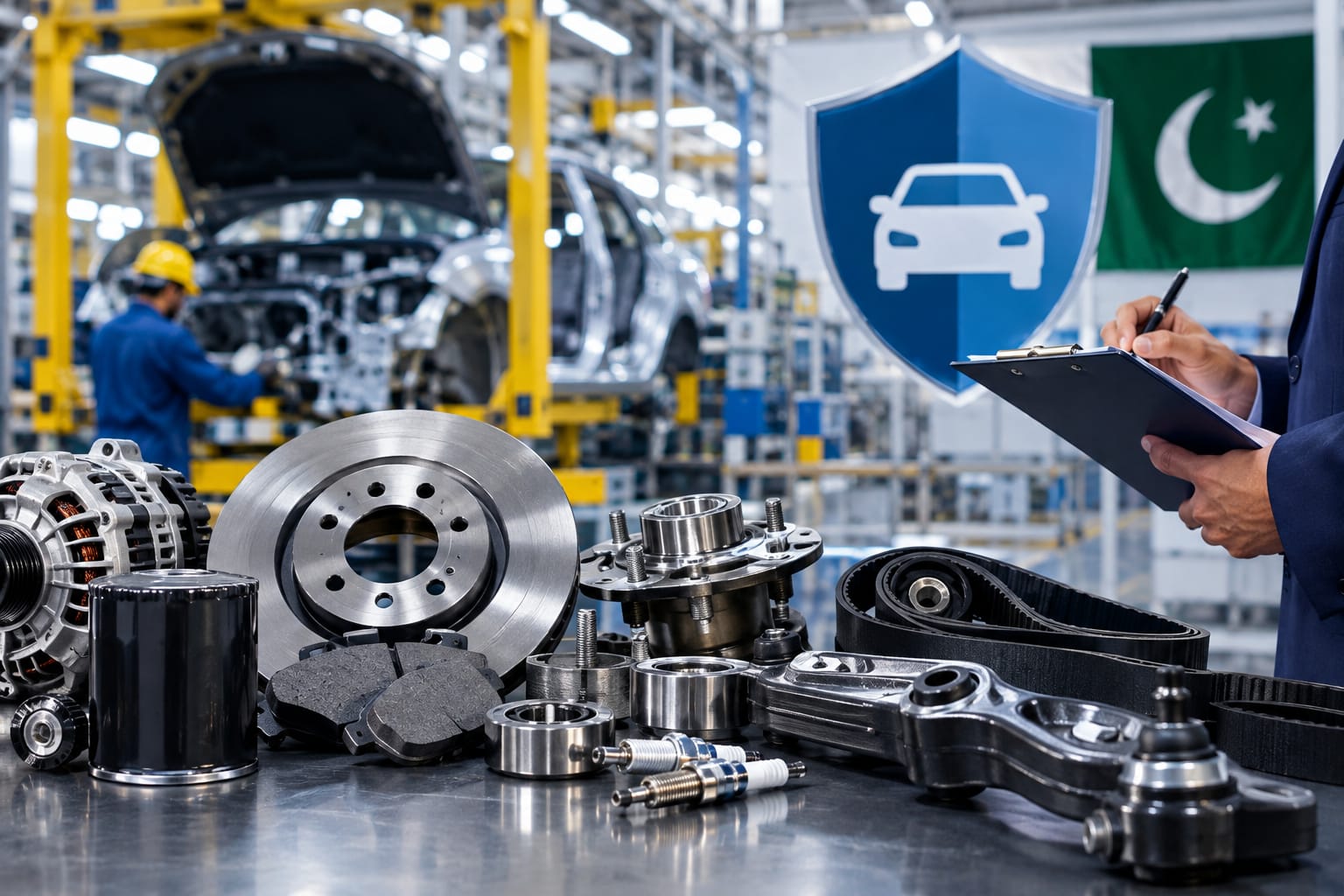
The government has approved an 11% additional customs duty on 13 more automobile-related items to protect local auto parts manufacturers and encourage domestic production. The decision was approved by the Economic Coordination Committee (ECC) of the federal cabinet following recommendations from the Ministry of Industries and Production.
The newly included items cover various automotive components, including tyres for heavy commercial vehicles, licence plates, side reflectors, wheel assemblies, windscreens, seat bases, footrests, tail boxes and related parts.
According to the Revenue Division and the Federal Board of Revenue (FBR), the measure involves updating SRO 693(I)/2006, which lists locally manufactured auto parts and components subject to additional customs duty under Section 18(5) of the Customs Act, 1969.
The existing notification covers more than 1,200 Pakistan Customs Tariff (PCT) codes for automobile parts and components. Additional customs duty rates are determined on the basis of recommendations from the Engineering Development Board (EDB) and the Ministry of Industries and Production. The list is periodically revised to reflect changes in local manufacturing capacity.
The latest revision follows recommendations submitted by the Ministry of Industries and Production in a letter dated September 7, 2026. The Revenue Division subsequently proposed amending the existing notification to extend the additional customs duty to the newly identified items.
The proposal, titled “Amendment in SRO 693 for Levy of Additional Customs Duty on Additional Items,” was circulated to the Ministry of Finance and the Ministry of Commerce before being presented to the ECC for approval.
The government expects the policy to discourage imports of parts that are now manufactured locally, support domestic auto parts producers and promote greater localisation across the automobile industry.
Officials also anticipate potential long-term benefits, including foreign exchange savings, employment generation and new export opportunities as local manufacturers expand their production capabilities.
The decision forms part of Pakistan's broader efforts to strengthen domestic manufacturing and reduce reliance on imported automotive components. Its long-term impact will depend on local industry's ability to meet quality standards, maintain competitive prices and supply the required parts efficiently.