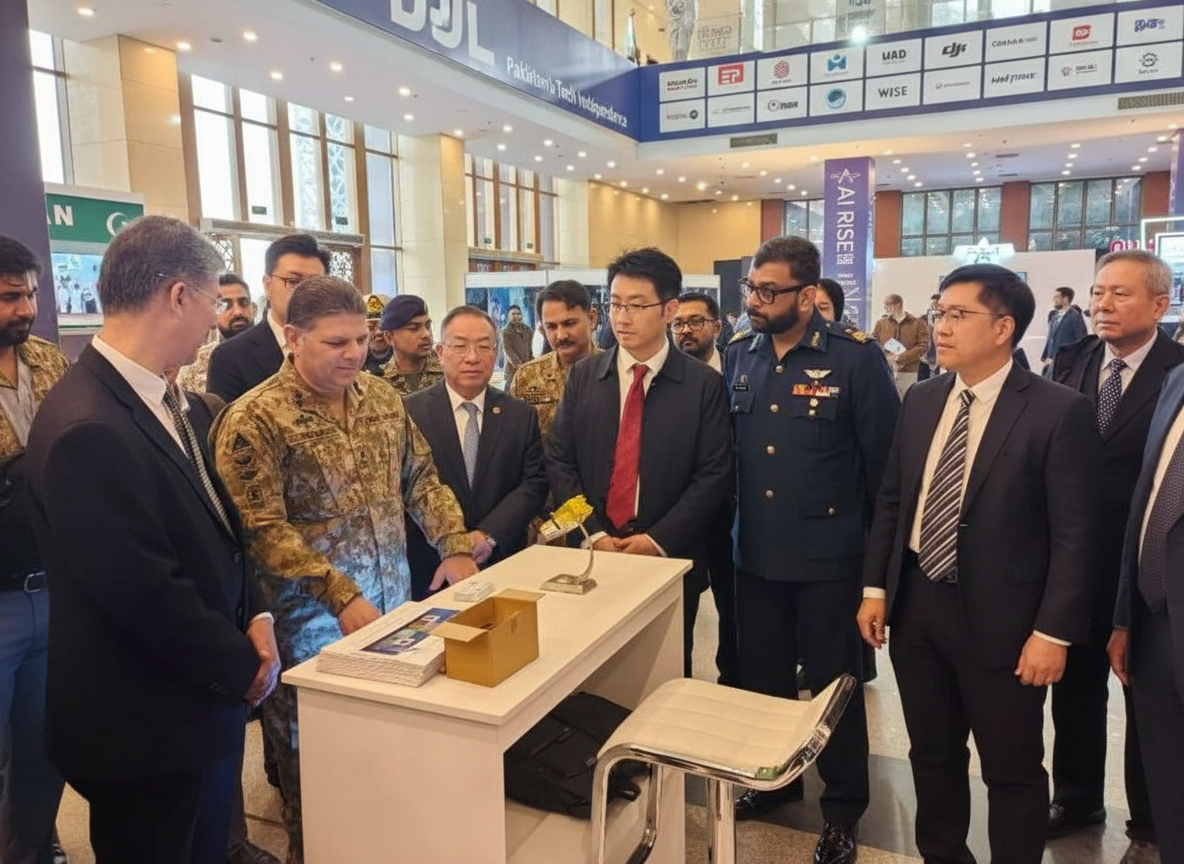
China’s technology firm PIESAT is deepening its cooperation with Pakistan in artificial intelligence and space technologies, following its participation at the AI Rise Expo 2025, held in Islamabad from December 26 to 28. During the event, PIESAT showcased cutting-edge satellite and drone technologies, including advanced remote-sensing applications, the company announced.
The firm held discussions with officials from Pakistan’s Space and Upper Atmosphere Research Commission (SUPARCO), providing updates on progress at the forthcoming satellite manufacturing facility in Pakistan and the development of a satellite internet constellation. These initiatives build upon a 2.9 billion yuan (about $400 million) agreement signed in September to enhance Pakistan’s space infrastructure.
At the expo, PIESAT also unveiled its “Nuwa” radar satellite constellation, drawing interest from Pakistani government representatives. Officials praised its on-orbit data processing and target recognition capabilities—key technologies for real-time data applications in national projects.
Planning Minister Ahsan Iqbal, who inaugurated the expo, highlighted that the government’s “Uraan Pakistan” vision aims to accelerate the country’s shift toward a technology-driven economy. He emphasized the role of artificial intelligence and other advanced technologies in revitalizing industry and boosting competitiveness.
Organized by the World UAV Federation (Pakistan chapter), the event brought together innovators from over 20 countries, spotlighting advancements in AI, drone and counter-drone systems, robotics, and space technologies.
Under the recent agreement, PIESAT will assist Pakistan in establishing an integrated satellite system for real-time communication and remote sensing, with a goal of supporting essential public services such as disaster management, agricultural monitoring, and urban planning. Pakistani officials have called for accelerating these collaborative projects, highlighting their importance to national development and technological independence.