Pakistan is emerging as a promising player in the global race for critical minerals, as U.S. companies step up efforts to secure supplies of antimony, the Financial Times has reported. The growing American interest signals new investment prospects for Pakistan’s mining industry amid rising geopolitical competition over mineral resources.
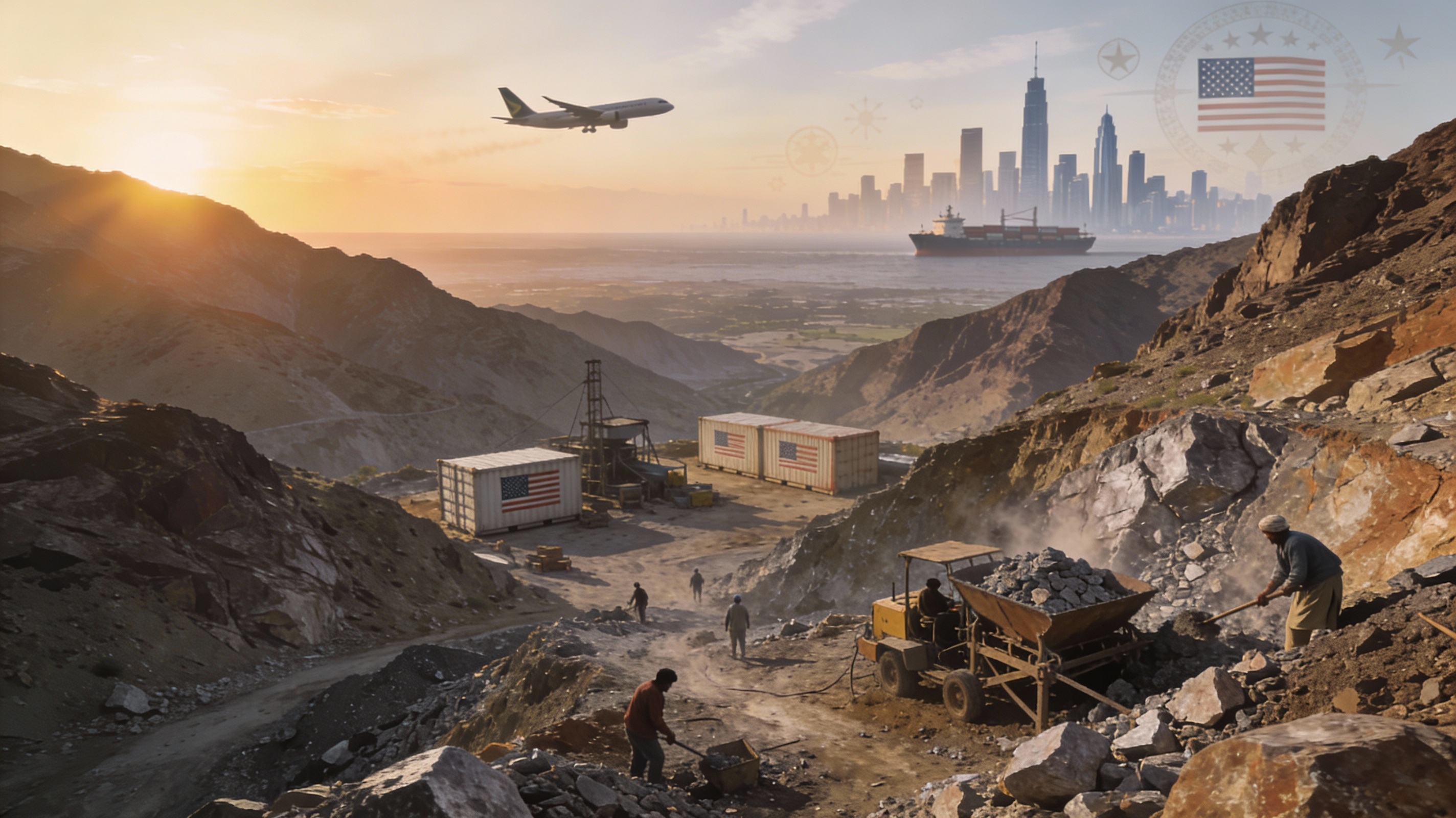
For years, Pakistan’s antimony output mostly from small-scale mines in the country’s mountainous north-west was sold at modest rates to Chinese intermediaries. But with concerns mounting over China’s dominance of global mineral supply chains, U.S. defence-linked companies are now exploring Pakistan as an alternative source.
Liaqat Ali Sultan, CEO of Himalayan Earth Exploration, told the Financial Times that discussions over antimony exports, ongoing for several years, have recently gained momentum. The metal used in missiles, batteries, and flame retardants now trades around USD 40,000 per tonne due to global shortages and increasing strategic demand.
Himalayan Earth Exploration has partnered with Nova Minerals, a U.S.-listed firm, to explore and develop Pakistan’s antimony reserves. Nova Minerals CEO Christopher Gerteisen said the company plans to buy more than 100 tonnes of Pakistani antimony concentrate early next year for testing and processing at its facilities in Alaska. He added that future collaboration could include downstream processing within Pakistan.
In a related development, Pakistan’s Frontier Works Organisation (FWO) and U.S. Strategic Metals (USSM) signed a USD 500 million memorandum of understanding in September to enhance cooperation in the critical minerals sector. USSM also tested a sample of Pakistani antimony in October to assess its quality.
Though Pakistan possesses only about one percent of global antimony reserves, the country’s growing engagement in this sector highlights its strategic potential. Industry experts note that Pakistan remains at the lower end of the value chain, with limited processing and refining capacity.
According to the Financial Times, U.S. buyers are offering higher prices than Chinese firms, reflecting Washington’s broader goal of diversifying critical mineral supply sources. Analysts believe the shift could open doors for technology transfer, domestic value addition, and strengthened economic ties between Pakistan and the United States.