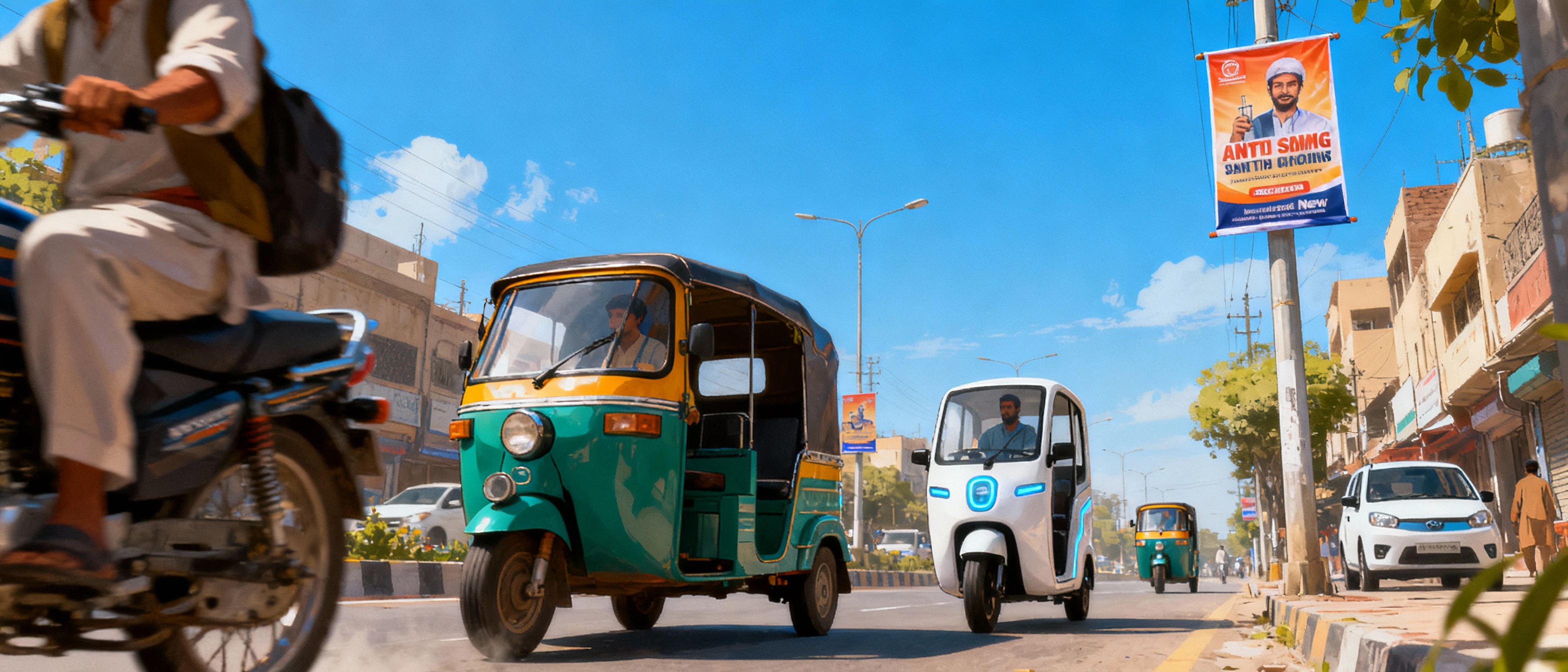
The Punjab government has officially banned the production of petrol-powered motorcycle rickshaws in a major initiative to reduce air pollution and protect public health across the province. This decision was approved by the Punjab cabinet's anti-smog committee, chaired by Chief Minister Maryam Nawaz Sharif, during a special meeting. The new policy aligns with a phased plan to gradually end the manufacturing of petrol motorcycles while mandating that all government departments purchase only electric or hybrid vehicles, including e-motorcycles.
Additional measures introduced alongside the ban include prohibiting washing vehicles at home and installing color-coded waste bins across the province to improve waste management. Strict penalties will be enforced against environmentally harmful practices such as burning plastic and other toxic materials. The government will also establish public-private workshops to continuously test vehicle emissions and ensure compliance with pollution standards.
Ongoing anti-pollution efforts in Punjab include an Air Quality Monitoring Network with 41 sensors in 18 districts, with plans to expand to 141 sensors next year. Satellite and drone monitoring have reduced crop residue burning by 88% in areas around Lahore. Punjab has also launched digital tools like an Eco Chatbot, a public environmental dashboard, and a 24/7 Smog War Room for continuous pollution monitoring.
The Provincial Disaster Management Authority (PDMA) issued smog and fog alerts for major cities including Lahore, Sheikhupura, Kasur, Faisalabad, Multan, and Bahawalpur, directing authorities to enforce anti-smog regulations strictly. Current Air Quality Index data indicates Lahore remains the world’s second most polluted city, with other cities also experiencing dangerously high pollution levels.
These actions represent a comprehensive and long-term strategy by Punjab’s government to combat smog, promote cleaner vehicle technologies, and enhance environmental standards province-wide.