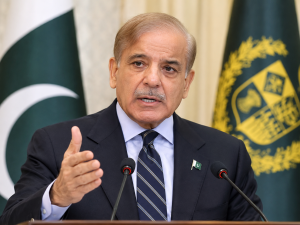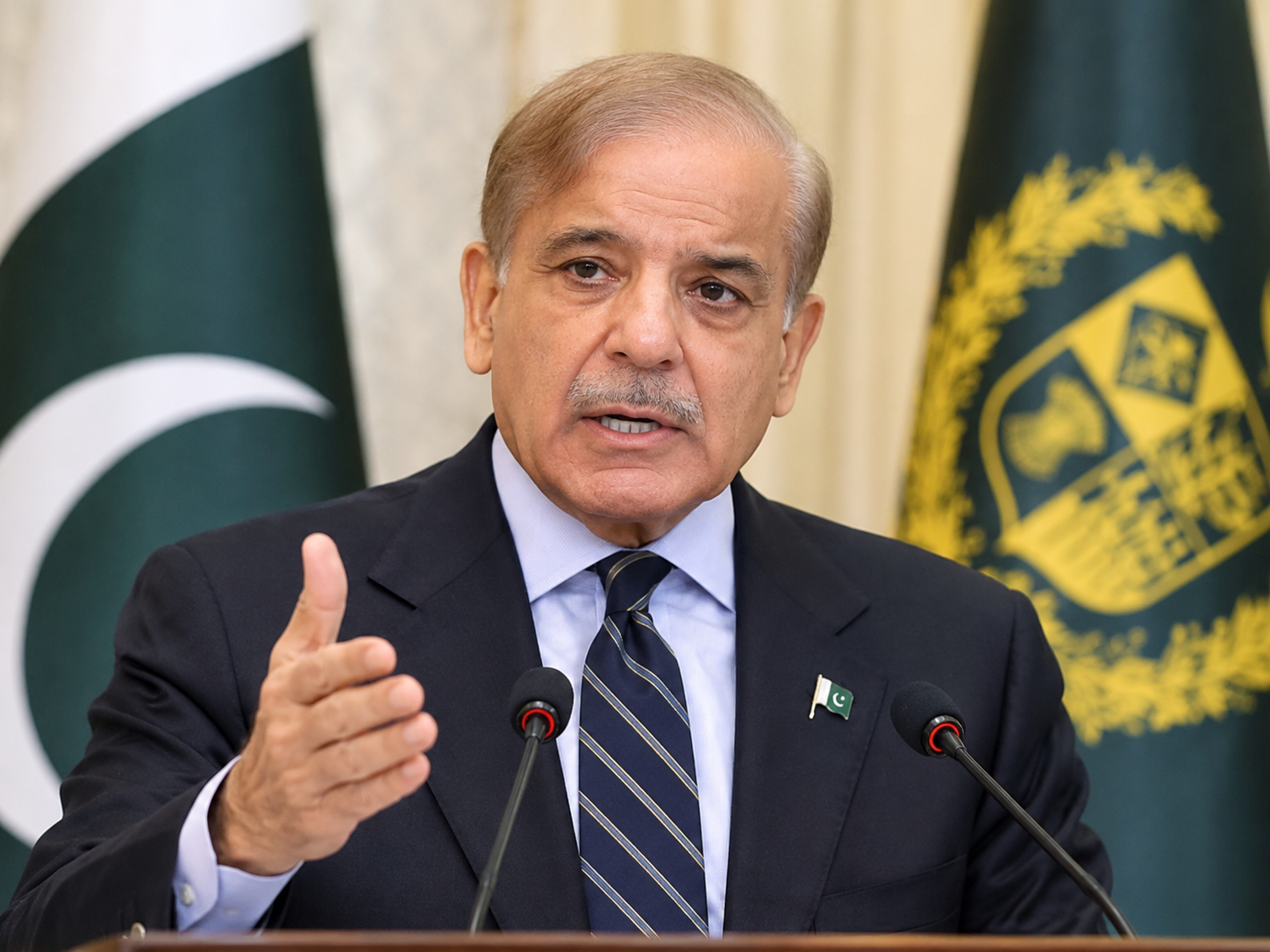
Prime Minister Shehbaz Sharif has credited Pakistan’s recent economic progress to what he described as a “productive partnership” between the country’s political and military leadership, saying coordinated efforts and teamwork have played a key role in stabilising the economy.
Addressing a ceremony organised by the American Business Council of Pakistan on Thursday, the prime minister said the country's achievements would not have been possible without collective leadership and cooperation. He specifically acknowledged Chief of Defence Forces and Chief of Army Staff Field Marshal Asim Munir and his team, alongside the government's economic team, for their contributions.
Shehbaz Sharif said Pakistan could have achieved much greater progress if such cooperation had existed in previous decades. He stressed that national development required mutual understanding, flexibility and a shared commitment to serving the country's interests.
The prime minister recalled that Pakistan faced a serious risk of default in 2023 but said government efforts had helped restore macroeconomic stability. Despite economic pressures and the ongoing Gulf crisis, he maintained that the country had avoided widespread fuel shortages and long queues at petrol stations. He also highlighted the government's fuel relief programme for vulnerable sections of society.
He acknowledged, however, that Pakistan remained exposed to external energy pressures, particularly because more than 90 per cent of its energy requirements are imported. He said maintaining economic stability would require continued reforms, disciplined policymaking and sustained efforts.
Discussing regional tensions, Shehbaz Sharif said Pakistan was actively working to promote peace in the Middle East through diplomatic engagement with Tehran and Washington, supported by friendly countries. He expressed hope that peace would be restored, creating opportunities for stronger economic growth.
The prime minister also assured members of the American Business Council that the government was committed to addressing investors' concerns, removing regulatory obstacles and improving transparency. He invited business representatives to share their genuine grievances so that an effective mechanism could be developed to resolve them.
Highlighting recent fiscal measures, he said the government had provided tax relief worth Rs400 billion in the previous budget despite operating under an International Monetary Fund (IMF) programme. The incentives were aimed at supporting exporters, manufacturers, corporate businesses and salaried individuals.
Shehbaz Sharif further pointed to Pakistan's substantial mineral resources, describing their potential value as trillions of dollars. He said work in the minerals sector had accelerated over the past two to three years and could become an important driver of future investment and economic development.
The prime minister also called for greater competition and modernisation in the automobile industry, arguing that Pakistan needed to move towards electric vehicles and technologies that reduce dependence on imported energy and help address climate challenges.
Concluding his address, Shehbaz Sharif said the government had taken difficult decisions, maintained fiscal discipline and initiated structural reforms. He emphasised that the next priority was to consolidate economic gains and place Pakistan on a sustainable, export-led growth path.