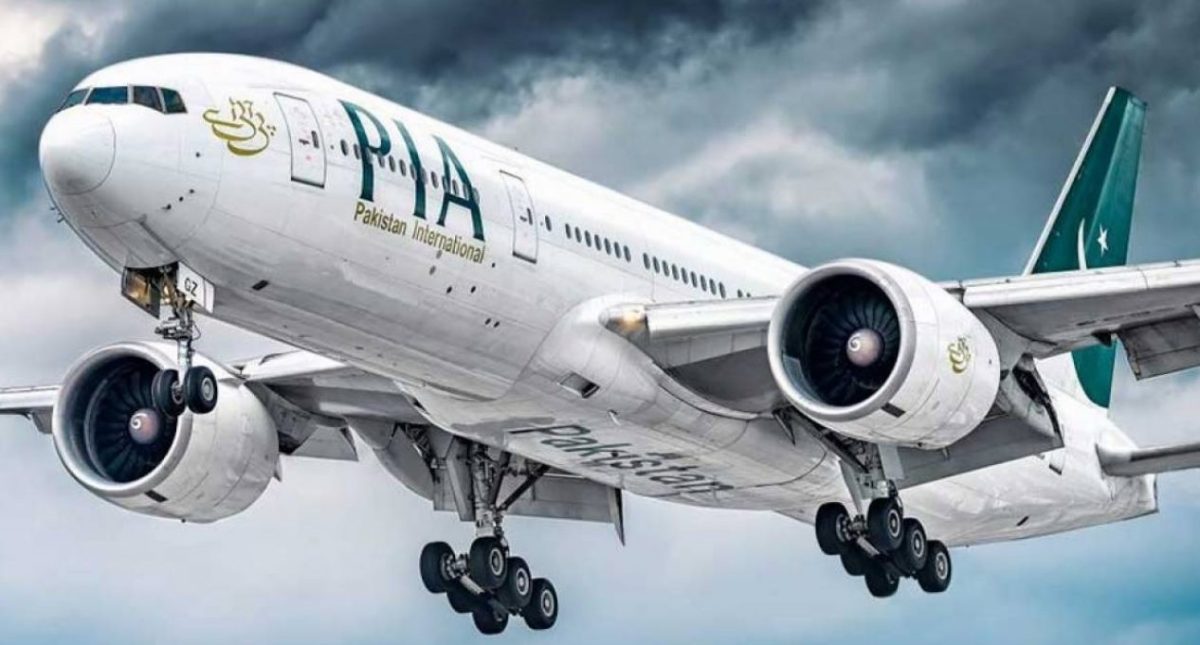
The Privatisation Commission will move ahead with the sale of Pakistan International Airlines Corporation Ltd (PIAC) on Tuesday, December 23, with three bidders left in the running after the withdrawal of Fauji Fertiliser Company Ltd.
According to the schedule issued on Sunday, bids will be submitted between 10:45am and 11:15am and opened at 3:30pm, with the entire process to be broadcast live on television on government instructions. The three remaining bidders include:
-
A consortium of Lucky Cement Limited, Hub Power Holdings Limited, Kohat Cement Company Limited and Metro Ventures (Private) Limited.
-
A consortium of Arif Habib Corporation Limited, Fatima Fertiliser Company Limited, City Schools (Private) Limited and Lake City Holdings (Private) Limited.
-
Air Blue (Private) Limited.
Privatisation Commission Chairman and Adviser to the Prime Minister on Privatisation, Muhammad Ali, confirmed in a YouTube interview that Fauji Fertiliser Company Ltd had opted out of the PIA bidding. He explained that once the sealed bids are received on Tuesday, they will be placed in a transparent box, after which the commission’s board will meet to set a reference price.
The reference price will then be placed before the Cabinet Committee on Privatisation (CCoP) for approval, and the approved figure will be disclosed at the time of bid opening. If any bids exceed the reference price, an open auction will be held among the qualifying bidders; if all bids fall below that benchmark, the highest bidder will still be given preference.
Outlining the next steps, Mr Ali said the federal cabinet is expected to endorse the transaction within a few days. This will be followed by the signing of transaction documents already submitted by the bidders, after which the commission will have 90 days to complete key formalities, including the transfer of properties, liabilities and leased aircraft.
Transaction structure
Under the approved structure, investors will bid for a 75 per cent stake in PIA. Of the proceeds from this 75pc stake, 92.5pc will go directly to PIA, while only 7.5pc will accrue to the national exchequer. The remaining 25pc of the airline’s shares will stay with the government as a strategic holding, though the successful bidder will retain the option to buy this residual stake later or leave it in state hands.
Mr Ali said the valuation of this remaining 25pc will be carried out after the sale of the initial 75pc stake. Bidders have been allowed to decide within 12 months whether to purchase the additional 25pc, subject to a 12pc premium on the eventual valuation. While they must take their decision on the 75pc stake on Tuesday, they will have up to 90 days to decide on acquiring the remaining shares.
He disclosed that prospective investors had requested a staggered payment plan for the 75pc stake over one year, but the government rejected this, arguing that such an arrangement would unfairly shift risk onto the state. If PIA’s performance deteriorated in that period, the buyer might back out, and if performance improved, the buyer would proceed, a scenario Mr Ali described as unacceptable for the government. Under the agreed payment terms, the winning bidder will deposit two-thirds of the bid amount within 90 days, with the remaining one-third payable within one year.
Economic impact and PIA’s profile
Mr Ali argued that a successful turnaround of PIA would boost GDP growth and the wider economy. He noted that Pakistan’s aviation sector currently accounts for only 1.3pc of GDP, compared to 18pc in the UAE and 8.5pc in Saudi Arabia, and maintained that PIA’s latent potential could significantly lift this share.
Out of a fleet of 34 aircraft, only 18 are presently operational, but PIA maintains air service agreements with 97 countries and holds landing rights in more than 170. The airline currently posts a net profit of Rs11 billion and equity of Rs30bn, while liabilities of Rs26bn will remain on PIA’s books, to be cleared by the new owners over five years.
On the labour front, Mr Ali said the draft agreement ensures no employee can be laid off during the first year after privatisation. Staff pensions and benefits will be fully protected, while pension-related liabilities for retired employees including medical facilities and discounted tickets will be assumed by the holding company. PIA’s workforce has already been reduced from 11,500 in 2011 to about 6,500, a cut of some 5,000 employees over recent years.
Describing PIA as a valuable but underutilised asset, Mr Ali warned that poor management could continue to inflict heavy financial losses, whereas efficient management could unlock “mammoth” earnings. With a domestic market of 250 million people and extensive destinations, routes and landing slots, the airline has significant commercial opportunities, he stressed.
What PIA now needs, he concluded, is fresh investment, additional aircraft and professional, efficient management that the government is not in a position to provide. The kind of decisive commercial choices required at the national flag carrier, he said, can be taken only in the private sector and, under the right stewardship, PIA could once again regain its former stature.