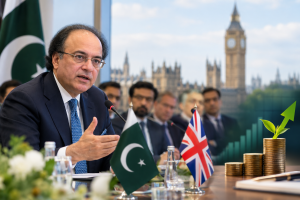
Pakistan has signed a memorandum of understanding with cryptocurrency exchange Binance to study the tokenisation of up to $2 billion worth of sovereign bonds, treasury bills and commodity reserves in a bid to deepen liquidity and attract new investors, the finance ministry announced on Friday. Tokenisation refers to turning a real-world asset into a digital representation on a blockchain.
Under the agreement, both sides will examine a partnership for blockchain-based issuance and distribution of government-linked assets, including oil, gas, metals and other raw materials owned by the state. Binance and its affiliates may provide Pakistan with technical expertise, advisory support, training and capacity building so authorities can evaluate modern, regulation-compliant blockchain infrastructure.
In a parallel step, Pakistan has granted initial approvals for Binance and digital-asset platform HTX to register with local regulators, paving the way for them to establish on-the-ground subsidiaries and begin the process of applying for full exchange licences. Officials said these early clearances form part of a phased licensing regime in which the strength of an exchange’s compliance framework will determine how it progresses.
Finance Minister Muhammad Aurangzeb hailed the understanding with Binance as a strong signal to both domestic and international audiences, describing it as the foundation of a long-term partnership. He said the focus would now shift from signing to execution and vowed that Pakistan was committed to delivering results “with speed and quality”.
The finance ministry noted that, subject to regulatory sign-off, the tokenisation programme could eventually cover up to $2bn in assets, improving liquidity, transparency and access to global markets. Binance founder Changpeng Zhao called the accord a major milestone for the global blockchain sector and for Pakistan, saying it marked the beginning of the full-scale rollout of the tokenisation initiative and expressing confidence that the collaboration would deliver lasting economic benefits.
These moves come as Pakistan accelerates a broader digital-finance reform agenda that includes setting up the Pakistan Crypto Council and the Pakistan Virtual Assets Regulatory Authority, and designing a formal licensing framework for virtual-asset firms. Authorities are also preparing a pilot central bank digital currency and a Virtual Assets Act for 2025, alongside separate work with US-based World Liberty Financial on stablecoins, tokenisation and other digital-asset infrastructure.