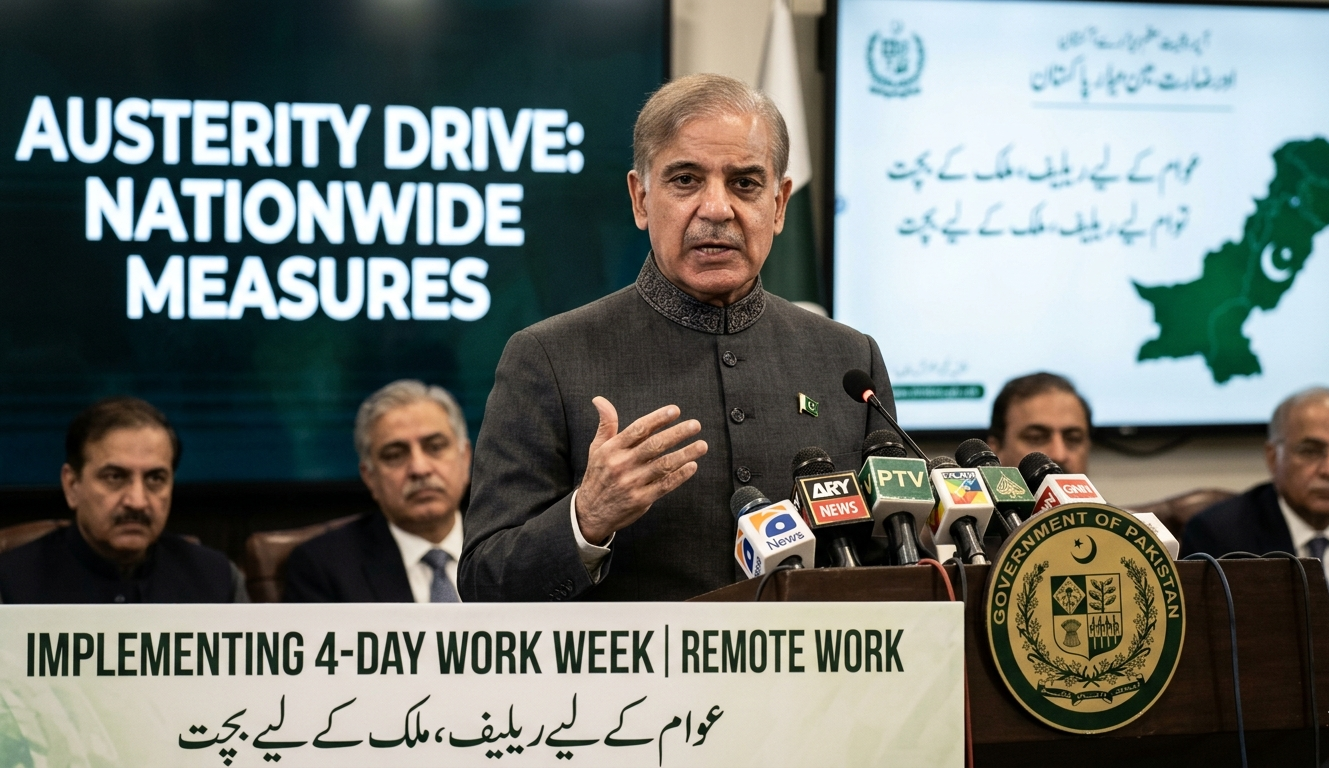
In an urgent bid to stabilize the national economy, Prime Minister Shehbaz Sharif has announced a sweeping "austerity drive" designed to combat rising global oil prices and regional economic pressures. The new policy mandates a four-day work week for the majority of offices and requires 50% of the workforce to work from home, aiming to drastically cut fuel consumption and government overhead.
Addressing the nation via television after a high-level meeting, the Prime Minister emphasized that these measures are essential to curb public spending. While the private and public sectors must shift to this new hybrid schedule, essential services and the banking sector remain exempt to ensure the economy stays functional.
Redefining the Public Sector
The government is targeting its own fleet and personnel to lead by example. Over the next two months, fuel allocations for government vehicles will be slashed by 50%, and 60% of the federal and provincial vehicle fleets will be taken off the road. Operational vehicles, such as ambulances and fire engines, are protected from these cuts to maintain public safety.
Financial Sacrifices at the Top
The austerity plan reaches into the pockets of the country’s leadership. Cabinet ministers and special assistants will forgo their entire salaries and allowances for the next two months. Additionally, members of national and provincial assemblies will see a 20% pay cut, and high-ranking officials in Grade 20 or above will face a two-day salary deduction.
Operational and Educational Restrictions
To further save costs, the government has imposed several strict administrative bans:
-
Travel & Events: All foreign visits for officials are suspended unless deemed absolutely necessary. Official dinners and seminars in hotels are banned, with all meetings moving to government venues or online platforms.
-
Public Gatherings: Major outdoor events, including traditional festivals like horse and cattle shows, have been postponed.
-
Education: Schools and colleges will remain closed from March 10 to March 31, transitioning to online classes while maintaining current examination schedules.
Economic Outlook and Enforcement
The fiscal impact of these changes is expected to be substantial. Authorities project a saving of PKR 4.5 billion from fuel cuts alone, while a 20% reduction in non-development budgets could save an additional PKR 22 billion.
To prevent market manipulation during this period, District Petroleum Monitoring Committees will be formed, and the Punjab IT Board will implement a track-and-trace system for fuel. Provincial governments have been directed to take strict action against any hoarding or profiteering as these measures take effect nationwide.