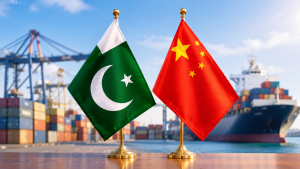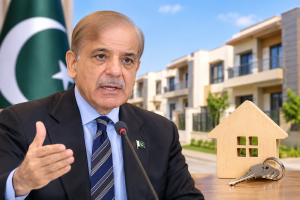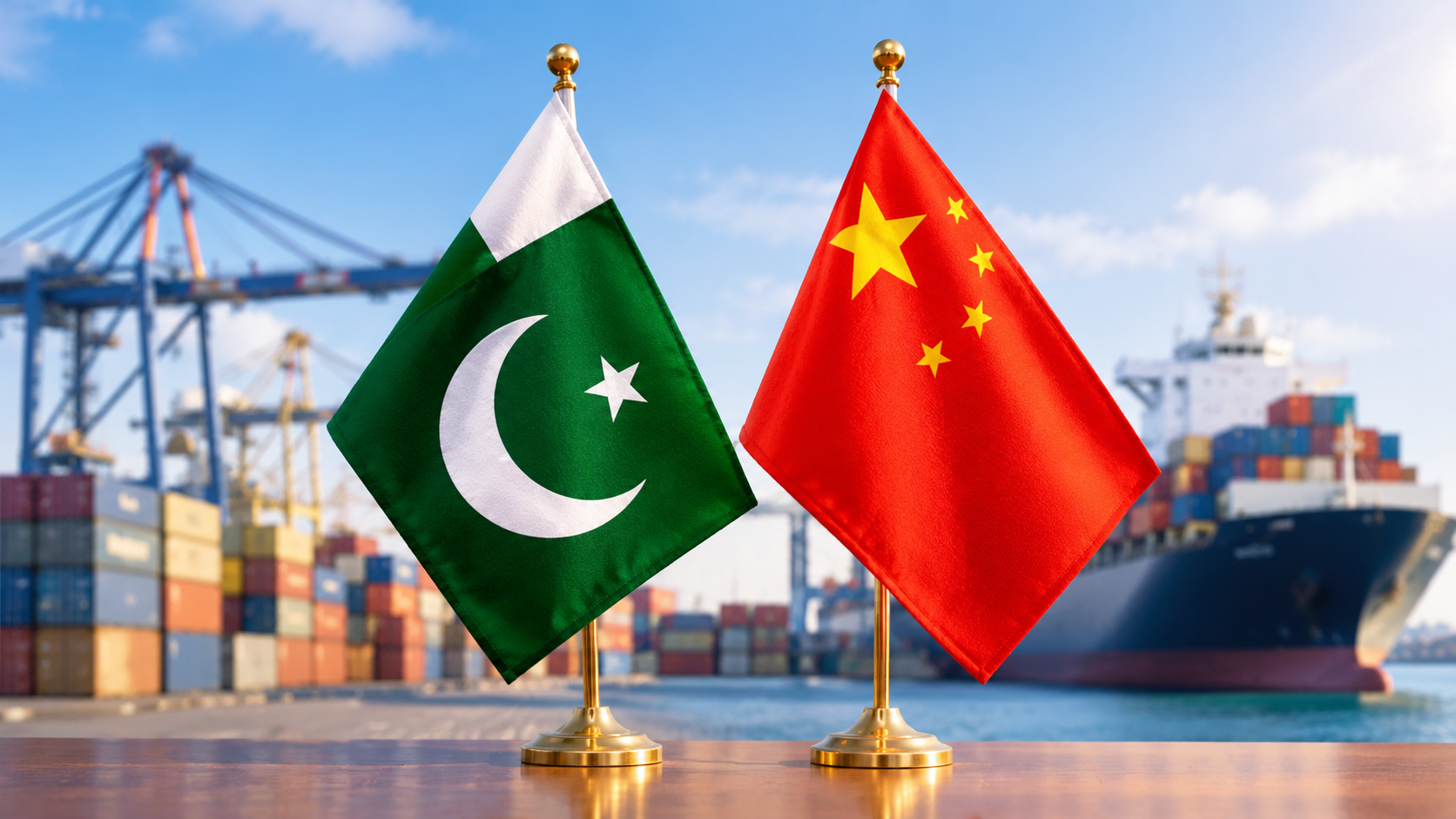
Pakistan has sought zero-tariff access for its exports to the Chinese market, aiming to increase annual shipments from approximately $3 billion to $20–25 billion. Planning Minister Ahsan Iqbal raised the proposal during a meeting with Liu Haixing, Minister of the International Department of the Communist Party of China (CPC) Central Committee, in Beijing. He suggested China's tariff concessions for African countries as a possible model to improve the competitiveness of Pakistani products.
The discussions also focused on strengthening bilateral trade, establishing a Pakistan-China Knowledge Corridor, and expanding cooperation under the second phase of the China-Pakistan Economic Corridor (CPEC). The proposed Knowledge Corridor aims to support around 10,000 Pakistani scholars in pursuing doctoral studies and specialised research in China over the next decade through scholarships, university partnerships, and joint financing. Priority areas include artificial intelligence, engineering, advanced manufacturing, modern agriculture, biotechnology, and mineral sciences.
Highlighting the achievements of CPEC's first phase, Iqbal said the initiative had attracted approximately $25 billion in investment, added more than 8,000 megawatts to Pakistan's power generation capacity, delivered 888 kilometres of highways and motorways, and generated an estimated 236,000 direct and indirect jobs.
For CPEC's second phase, Pakistan identified industrialisation, agricultural cooperation, technology transfer, mineral development, business partnerships, and green growth as major priorities. Iqbal stressed the importance of aligning Pakistan's URAAN development programme with China's 15th Five-Year Plan while maintaining policy continuity and ensuring the security of Chinese personnel and projects.
During separate talks with China's National Development and Reform Commission Vice Chairman Zhou Haibing, Iqbal sought progress on key infrastructure and energy projects, including the 102-kilometre Thor Nullah-Raikot section of the Karakoram Highway and the proposed upgrade of the ML-1 railway line beyond Karachi-Rohri.
Pakistan also requested Chinese support for restoring regular shipping services at Gwadar Port and proposed a feasibility study for strategic petroleum storage facilities. Discussions covered the Gwadar Free Zone, the second phase of the Eastbay Expressway, and a proposed mineral transportation corridor linking Chagai's mining areas with Gwadar.
Under CPEC 2.0, Pakistan further called for progress on the Kohala and Azad Pattan hydropower projects and proposed exploring the conversion of selected imported-coal power plants to locally sourced Thar coal.
Additionally, Pakistan suggested including three private-sector projects in the CPEC industrial agenda: an aluminium complex at Port Qasim, a fertiliser plant in Thar, and a refinery and fuel storage complex at Dhabeji.
The latest discussions reflect Pakistan's broader efforts to strengthen economic ties with China, secure preferential market access, attract investment, and expand cooperation in trade, infrastructure, energy, technology, and industrial development.