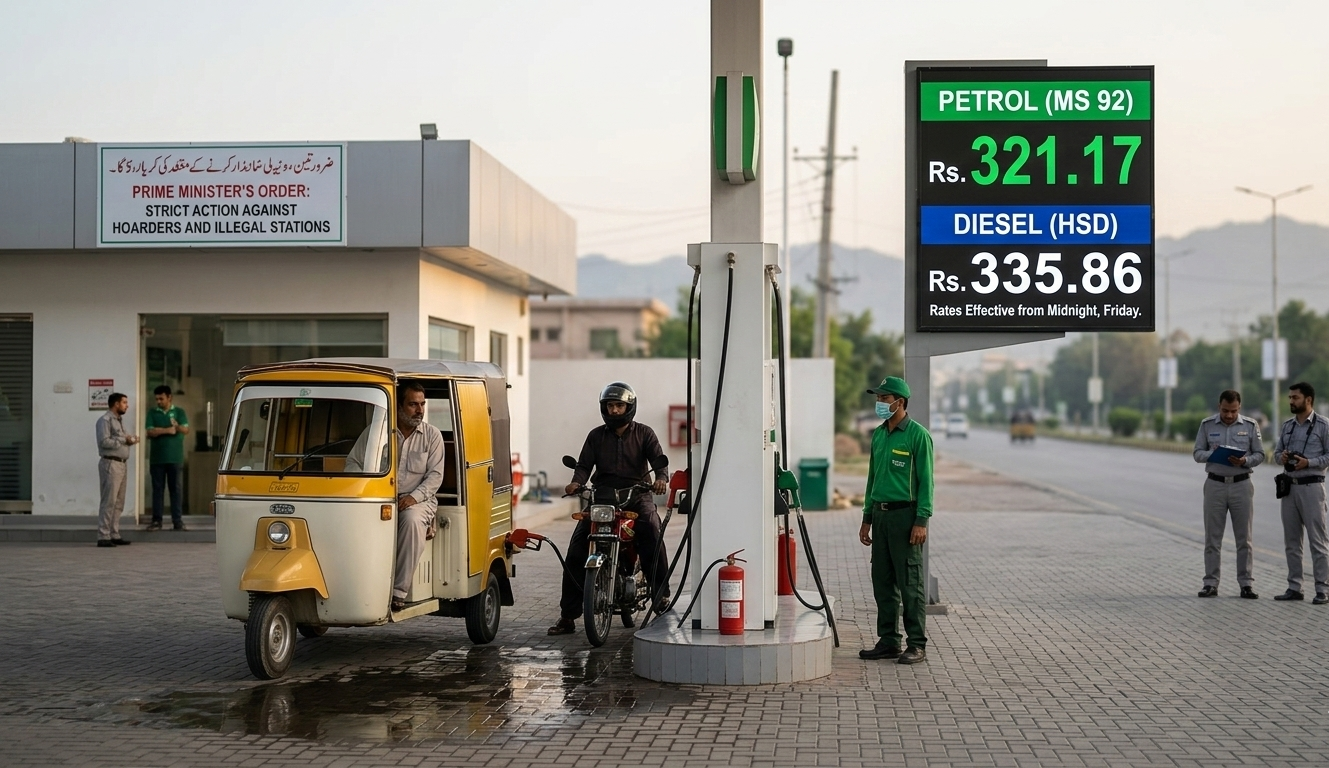
The Pakistani government has announced a massive Rs55 per litre hike in the prices of both petrol and diesel, effective from midnight on Friday. This drastic adjustment follows a sharp climb in international oil prices triggered by escalating geopolitical instability.
New Fuel Prices at a Glance
Following the record-breaking increase, fuel costs at the pump have shifted as follows:
-
Petrol: Increased to Rs321.17 per litre (up from Rs266.17).
-
High-Speed Diesel: Soared to Rs335.86 per litre (up from Rs280.86).
Global Conflict and Market Volatility
The decision was unveiled during a high-level press conference featuring Petroleum Minister Ali Pervaiz Malik, Finance Minister Muhammad Aurangzeb, and Deputy PM/Foreign Minister Ishaq Dar. Dar emphasized that the domestic hike is a direct consequence of the widening conflict involving Iran, the United States, and Israel.
The crisis reached a tipping point following military strikes on Iran and subsequent retaliatory actions, including threats to block the Strait of Hormuz. These developments sent global markets into a tailspin, with Brent crude jumping over 6% to reach $90.83 a barrel and WTI surging nearly 10% to $88.96 on Friday.
Government Strategy and Crackdown
While many nations allow for an automatic pass-through of global prices, Ishaq Dar stated that Prime Minister Shehbaz Sharif opted for a more "cautious approach," with a specialized committee deliberating for weeks to manage the impact.
To prevent further distress to the public, the government has taken the following steps:
-
Anti-Hoarding Measures: The Prime Minister has ordered an immediate nationwide crackdown on the hoarding of petroleum products.
-
License Cancellations: Provincial governments have been directed to shut down stations and cancel the licenses of any pumps creating artificial fuel shortages.
-
Economic Assessment: An 18-member high-level committee has been formed to continuously assess how these rising international costs will impact the broader national economy.