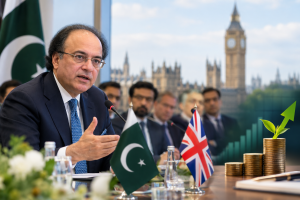
The federal government has officially launched a high-powered, 15-member committee aimed at radicalizing Pakistan's economic governance. This strategic move is a direct consequence of the International Monetary Fund’s (IMF) November 2025 assessment, which pinpointed critical vulnerabilities in the country's institutional oversight and anti-corruption frameworks.
The Economic Incentive
The stakes for this reform are high. According to the IMF’s findings, closing the governance gap is not just a policy requirement but a massive economic opportunity; successful implementation could drive a medium-term GDP increase of 5% to 6.5%.
Key Objectives & Accountability
Chaired by the Federal Finance Minister, the committee is tasked with a "top-to-bottom" review of how the state manages its finances. The mandate includes:
-
Quarterly Reporting: The Prime Minister will receive progress reports every three months to ensure the reform agenda stays on track.
-
Systemic Transparency: Improving accountability within tax policy and public procurement.
-
Institutional Synergy: Better alignment between the central bank, investment boards, and regulatory authorities.
A "Who’s Who" of Financial Governance
The committee’s roster represents a consolidated front of Pakistan’s economic and legal leadership:
-
Policy & Law: Senior officials from Finance, Law, Planning, IT, and the Law and Justice Commission.
-
Regulators: Leadership from the State Bank of Pakistan (SBP), the Securities and Exchange Commission (SECP), and the Competition Commission.
-
Investment Facilitation: Representatives from the SIFC and the Board of Investment.
-
Public Trust: The Auditor General and the Public Procurement Regulatory Authority (PPRA).
The Ministry of Finance will provide the necessary secretarial backbone for the group, with the Additional Secretary of Finance managing day-to-day coordination.