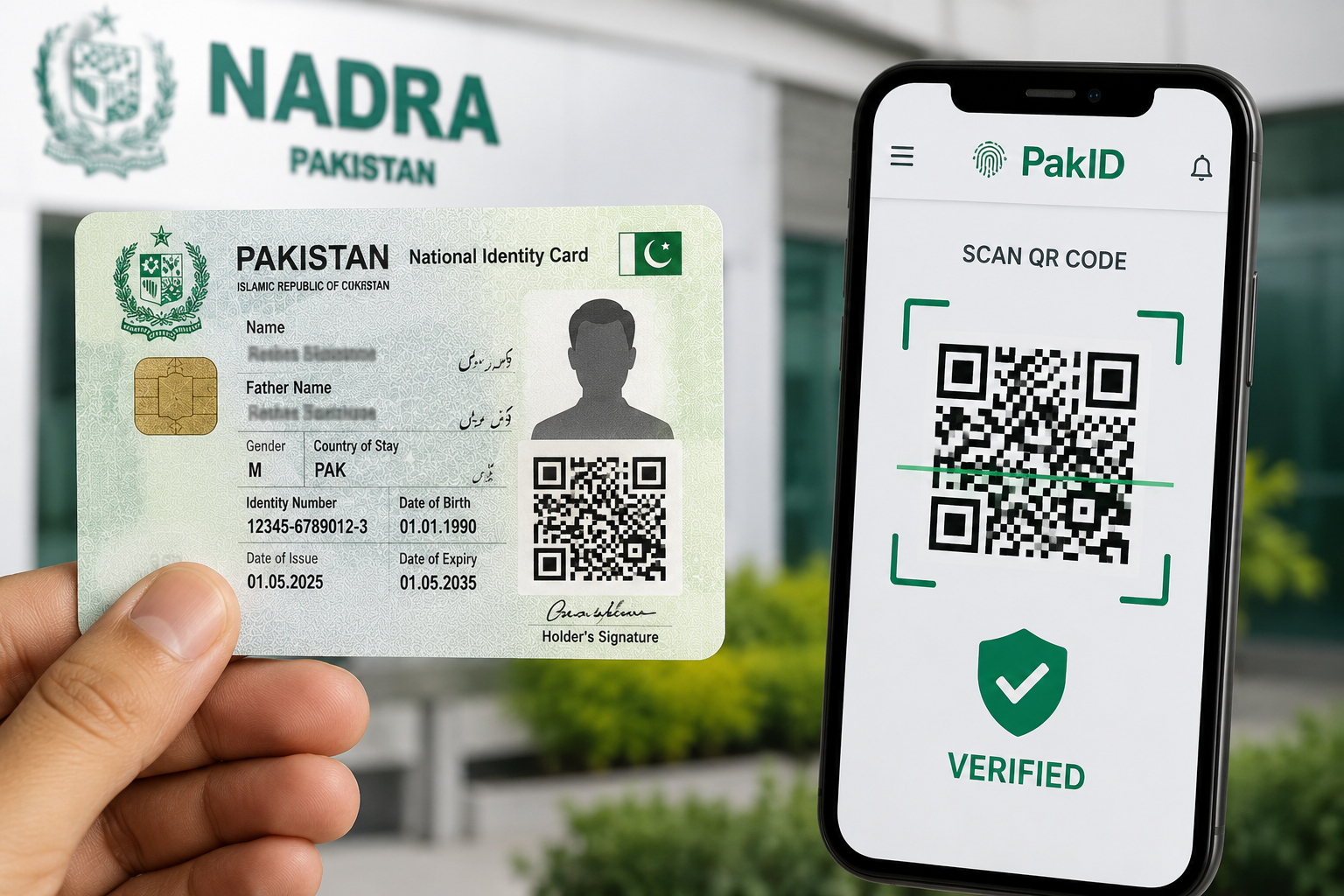
The National Database and Registration Authority (NADRA) has launched a new chipless Computerised National Identity Card (CNIC) featuring a secure QR code, replacing the microchip technology used in Pakistan’s identity cards for the past 14 years.
The new CNIC has been manufactured locally by the National Security Printing Company (NSPC) in Karachi according to NADRA’s technical and security requirements. The government approved the new identity card format in February.
QR Code Replaces Microchip
Instead of a microchip, the new CNIC contains a secure QR code carrying the cardholder’s identification information and photograph. The QR code can be scanned and verified through a smartphone using NADRA’s Pak Identity (PakID) mobile application.
According to NADRA, the QR-based identity verification system is designed to help authorised organisations retrieve names, addresses and other identity details more consistently while reducing errors associated with manual data entry.
Telecom operators, banks, hospitals, Pakistan Railways, police and other authorised institutions will also receive software to scan and verify the QR codes.
New Security and Identification Features
The new CNIC includes a family number and symbols identifying people with disabilities, senior citizens, organ donors and citizens of Azad Jammu and Kashmir.
Names and addresses will be printed in both Urdu and English, while the card incorporates updated visible and covert security features to strengthen identity protection.
Why NADRA Is Replacing the Chip-Based CNIC
NADRA said the Smart CNIC, introduced around 14 years ago, could not be fully utilised because specialised chip readers and supporting infrastructure were not widely available.
The QR-based system is intended to make identity verification more accessible because it can be scanned using ordinary smartphones and camera-enabled software, eliminating the need for dedicated chip-reading equipment.
QR-Based CNIC Rollout in Phases
The new QR-based card will be introduced in phases, replacing the standard CNIC from Friday. From January 2027, the new format will be extended to other identity documents, including National Identity Cards for Overseas Pakistanis (NICOPs) and Juvenile Cards.
Pakistan Origin Cards (POCs) will transition to the chipless format during the final phase.
NADRA has clarified that existing CNICs will remain valid until their expiry dates, meaning current cardholders do not need to immediately replace their existing identity cards.
The transition follows amendments to the National Identity Card Rules, 2002 and Pakistan Origin Card Rules, 2002, notified by the government in February. The amendments formally recognise QR codes and other technological features as alternatives to microchips, allowing NADRA to adopt newer identity-verification technologies without requiring repeated changes to the rules.