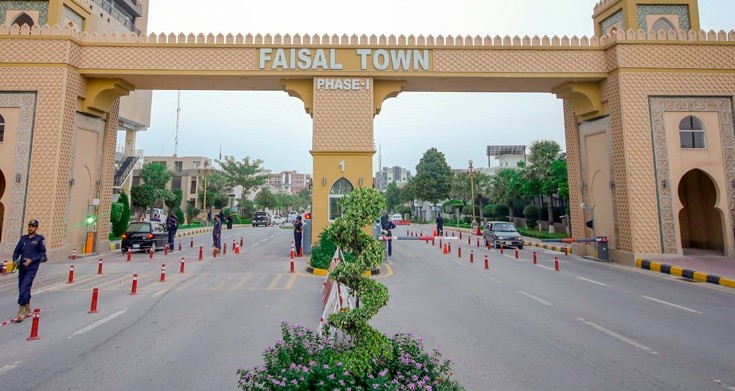
Pakistan's Federal Board of Revenue (FBR) has slapped Faisal Town Pvt. Ltd., a leading housing developer in Islamabad's Sector F-18, with a massive Rs 406.23 million tax demand plus default surcharge for Tax Year 2023.
The upscale Faisal Town project, strategically positioned near the M-1 Motorway and Islamabad-Peshawar interchange, offers seamless connectivity to Islamabad, Rawalpindi, and northern highways. Its prime location has fueled rapid growth, attracting domestic investors and overseas Pakistanis seeking premium real estate amid the capital's booming housing demand.
The January 31, 2026 order from Deputy Commissioner Inland Revenue at Large Taxpayer Office (LTO) Islamabad cites violations under Sections 161 and 205 of the Income Tax Ordinance, 2001. Section 161 holds withholding agents personally liable for failing to collect, deduct, or deposit taxes, while Section 205 imposes surcharges on overdue amounts.
Tax officials allege Faisal Town neglected its withholding agent duties on property transactions under Sections 236K (advance tax on property transfers) and 236C (real estate agents tax). Common issues include delayed FBR filings of withholding statements, late tax deposits, and poor broker payment documentation gaps that undermine transparency in high-value deals and cause government revenue losses.
Faisal Town vehemently denies the charges, filing an appeal with Commissioner Inland Revenue (Appeals), Islamabad. The developer labels the order "unlawful and devoid of legal effect," claiming:
-
No specific transactions, payee names, or broker details were provided.
-
Authorities skipped mandatory reconciliation under Rule 44(4).
-
No fair hearing opportunity was granted.
-
Default surcharge under Section 205 is baseless.
The company demands the appellate authority quash the order and waive the full Rs 406,233,613 demand plus surcharge, arguing the assessment defies legal precedents and the Ordinance's framework.
This case underscores ongoing FBR scrutiny of real estate developers amid Pakistan's push for better tax compliance in the sector. The appeal's outcome could set precedents for similar disputes nationwide.