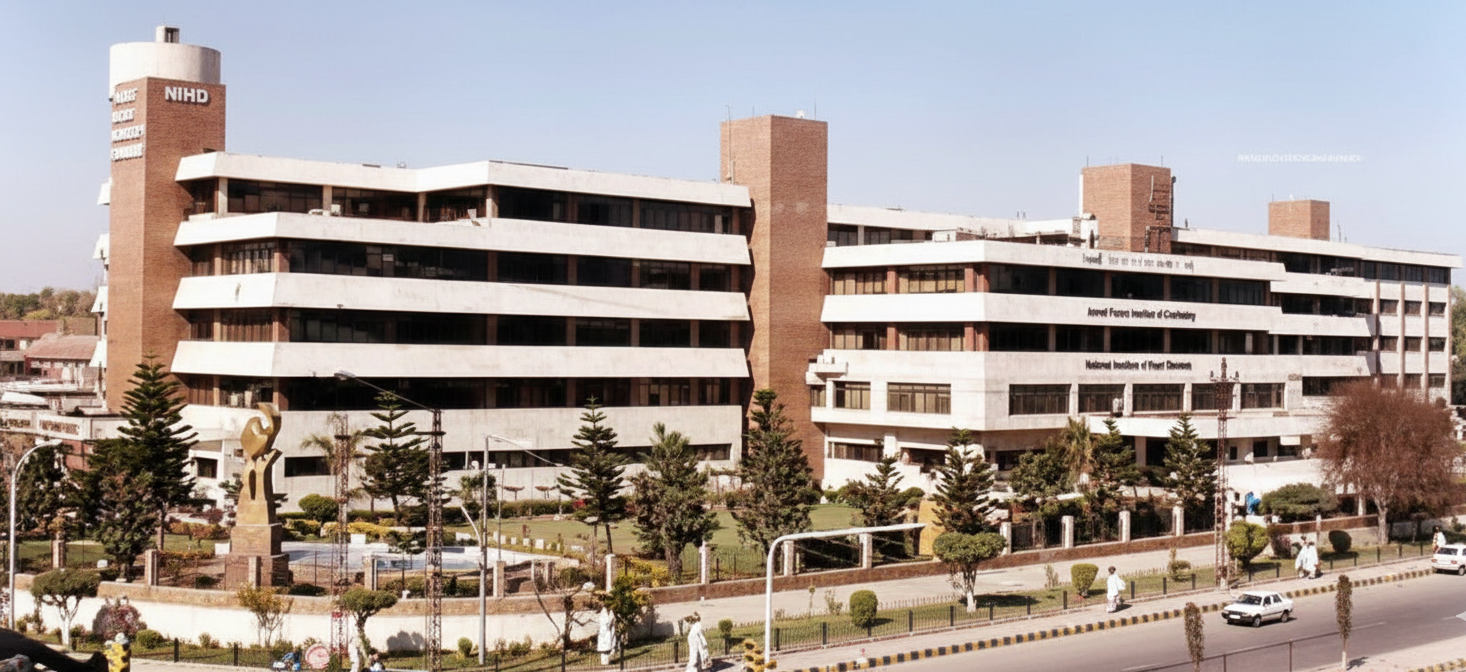
The federal government has greenlit a major expansion of the Armed Forces Institute of Cardiology (AFIC) and the National Institute of Heart Diseases (NIHD) in Rawalpindi. The Rs13 billion project was finalized by the Executive Committee of the National Economic Council (ECNEC), chaired by Deputy Prime Minister Ishaq Dar, to address critical gaps in Pakistan's tertiary cardiac care infrastructure.
Financing and Allocation
Despite initial concerns regarding fiscal constraints, the government decided to fund the project by redirecting savings from slow-moving schemes within the Public Sector Development Programme (PSDP).
-
Total Cost: Rs13 billion (Rs10.5 billion for capital works; the rest for consultancies).
-
Funding Split: Rs6 billion will be secured from foreign sources, while the remaining is domestic.
-
Immediate Need: Approximately Rs2 billion is required for the current fiscal year to initiate work.
Initially, the Planning Ministry suggested funding the project outside the PSDP to avoid straining national priority projects. However, ECNEC determined that the urgency of cardiac care necessitated a re-prioritization of existing development funds.
Why the Expansion Matters
The AFIC serves both military personnel and the general civilian population. Current facilities have been operating far beyond their intended capacity, leading to:
-
Severe Congestion: Overcrowded wards and waiting areas.
-
Delayed Treatment: Critical cardiac procedures facing long wait times.
-
Referral Pressure: Increased burden on other public hospitals due to lack of space at AFIC.
The new infrastructure will significantly increase bed capacity and modernize the hospital’s ability to provide advanced heart disease treatments.
Broader Development Approvals
Beyond healthcare, the ECNEC meeting approved a total of Rs240 billion for three other major national initiatives:
-
Prime Minister’s Youth Skill Development Programme (Rs23.5 billion): A four-year plan to train over 220,000 youth in IT, industrial, and conventional sectors.
-
Karachi Yellow Line BRT (Rs178.5 billion): A 21km dedicated bus corridor funded largely by a World Bank loan, designed to serve 300,000 passengers daily.
-
Harpo Hydropower Project: A clean energy initiative based in Gilgit-Baltistan.
Navigating Fiscal Hurdles
The approval highlights a delicate balancing act for the government. Planning Minister Ahsan Iqbal noted that the development portfolio is "fully stretched," warning that large new projects can lead to the under-funding of other priorities. To mitigate this, ECNEC directed that major procurements only begin once the full funding of Rs13 billion is securely arranged.