The government has officially raised the price of petrol by Rs8 per litre and high-speed diesel (HSD) by Rs5.16 per litre for the first fortnight of March. This latest adjustment comes as a fresh blow to consumers already struggling with high living costs, signaling an immediate increase in transport and production expenses across the country.
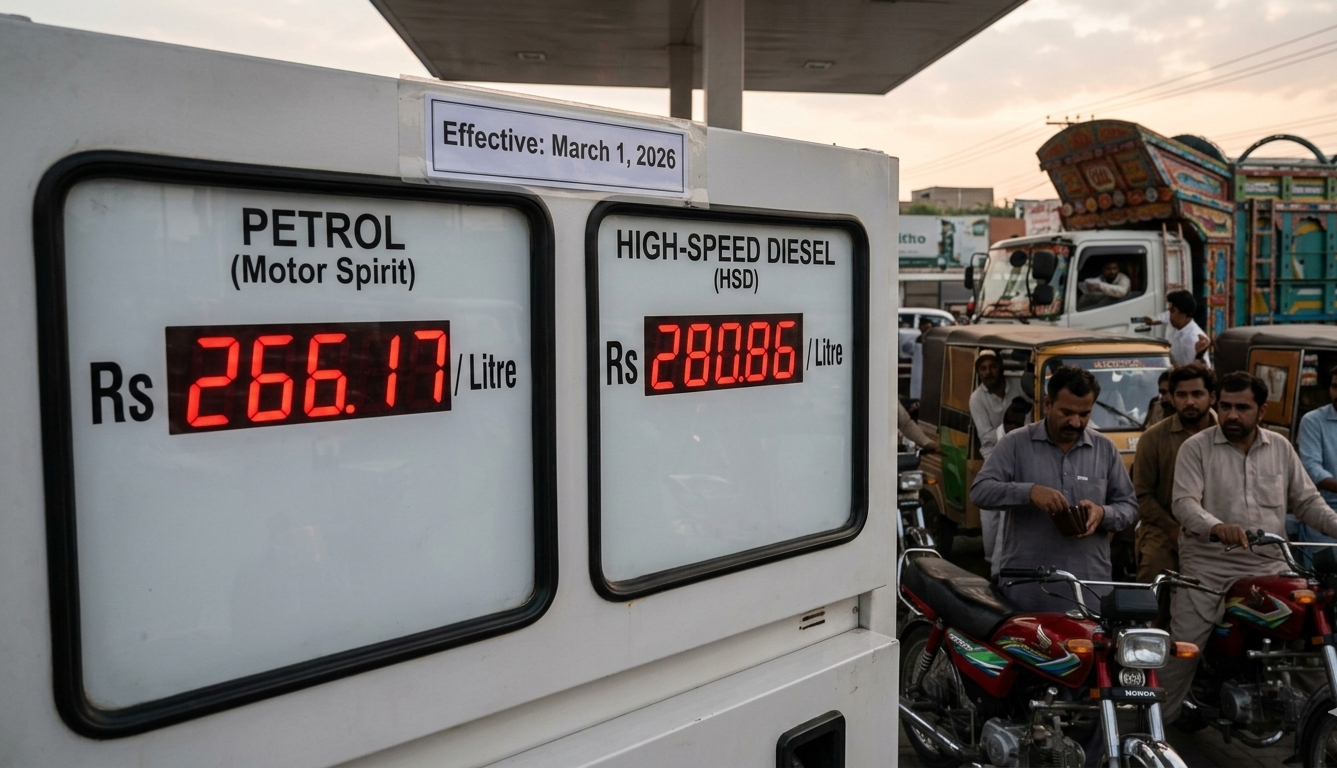
According to the Petroleum Division, these revised prices follow recommendations from the Oil and Gas Regulatory Authority (OGRA). Under the new schedule, Petrol has climbed from Rs258.17 to Rs266.17 per litre, while HSD has jumped from Rs275.70 to Rs280.86 per litre.
Direct Impact on Households and Transport
The hike in petrol prices is expected to hit middle- and lower-middle-income families hardest, as it is the primary fuel for motorcycles, rickshaws, and small private vehicles. Daily commuters and small business owners are likely to feel the pinch immediately.
Meanwhile, the rise in High-Speed Diesel prices carries a broader economic threat. As the backbone of heavy transport, trucks, buses, and railway locomotives, HSD is a critical driver of freight costs. This increase typically leads to higher transport fares and increased prices for essential commodities, including food grains and vegetables, as delivery costs are passed down to the end consumer.
Agricultural and Economic Pressures
Farmers are also bracing for impact. With HSD powering tractors and tube wells, the cost of maintaining the current crop cycle is set to rise, further squeezing the agricultural sector.
The government cited several external pressures behind the decision, including:
-
Regional Instability: Tensions in the Gulf region affecting supply routes.
-
Market Volatility: Ongoing fluctuations in global oil prices.
-
Exchange Rates: Persistent pressure on the domestic currency against the dollar.
These new prices are effective as of March 1, 2026, and will remain in place for the remainder of the fortnight.