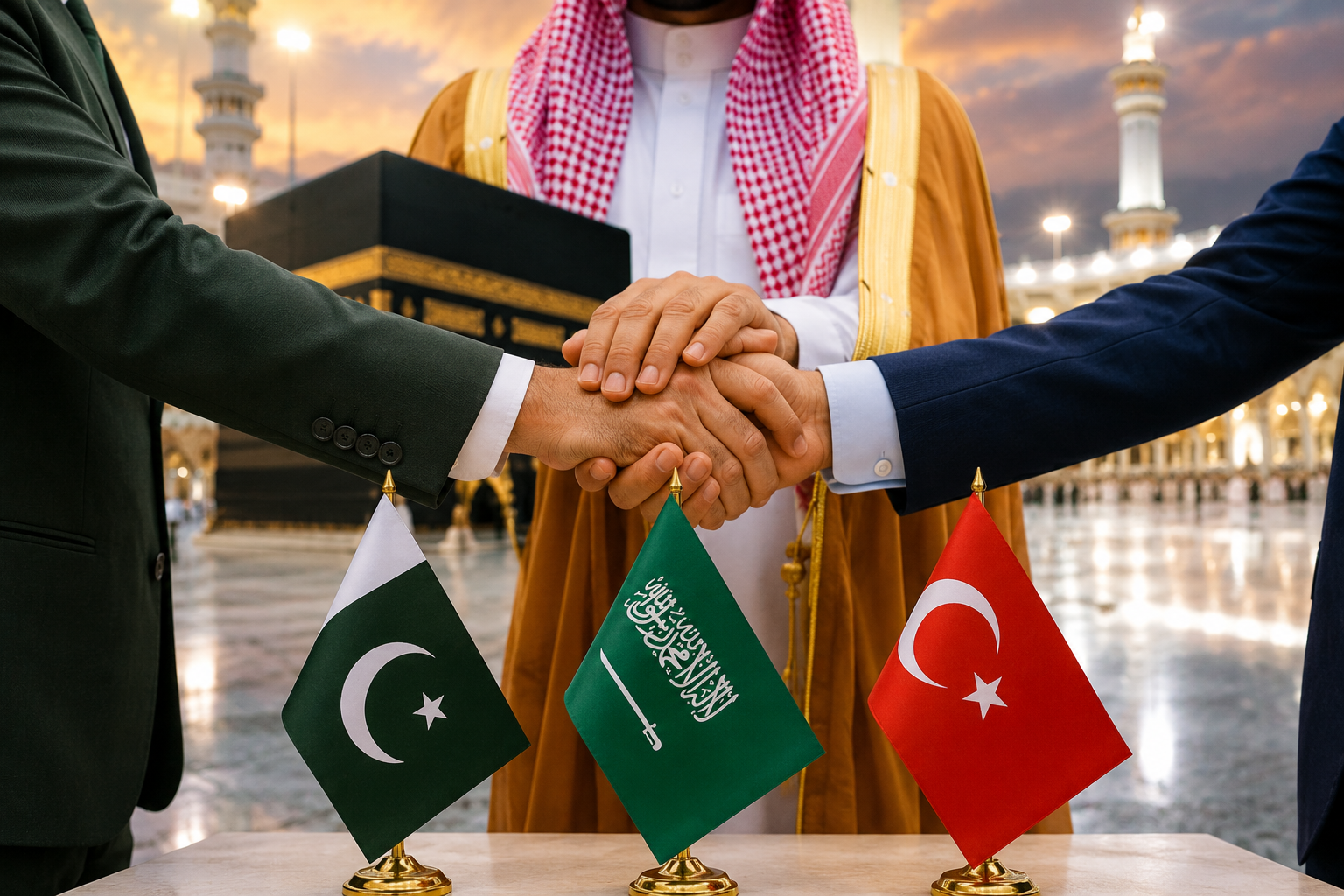
Pakistan, Saudi Arabia and Türkiye have signed the Makkah Joint Defence Agreement, strengthening trilateral defence cooperation and reaffirming their commitment to collective security, deterrence and regional stability, according to Pakistan's Ministry of Foreign Affairs (MoFA).
A key provision of the agreement states that an armed attack against any one of the three signatory countries will be considered an attack against all three. The pact establishes a framework for collective deterrence and is aimed at enhancing the countries' ability to respond jointly to potential security threats.
The agreement is built on the three countries' longstanding historical relations, shared Islamic solidarity, strategic interests and close defence cooperation. According to the Foreign Office, the pact reflects a common commitment to strengthening collective security and promoting peace, security and stability in the region and beyond.
The agreement also provides a framework for expanded cooperation across various areas of defence, further strengthening military and strategic ties between Pakistan, Saudi Arabia and Türkiye.
The pact was signed by Prime Minister Shehbaz Sharif, Turkish President Recep Tayyip Erdoğan, and Saudi Crown Prince and Prime Minister Mohammed bin Salman during the Makkah Al-Mukarramah Summit for Joint Defence, held at Al-Safa Palace in Makkah.
During the summit, the three leaders reviewed their longstanding bilateral and trilateral relations and discussed a range of issues of mutual interest. The meeting comes amid heightened security concerns across the Middle East and growing regional tensions.
The Saudi Ministry of Foreign Affairs also confirmed the signing of the Makkah Joint Defence Agreement, highlighting the historical ties, brotherhood, Islamic solidarity and shared strategic interests connecting the three nations.
Saudi Arabia said the agreement aims to strengthen collective security and defence cooperation, while contributing to peace and stability in the region and internationally. The ministry reiterated that any armed attack against one of the three countries would be treated as an attack against all.
The signing of the Makkah defence pact marks a significant development in the strategic relationship between Pakistan, Saudi Arabia and Türkiye. The agreement is expected to deepen defence coordination, strengthen collective deterrence and provide a broader framework for cooperation on emerging regional security challenges.
The Makkah Joint Defence Agreement between Pakistan, Saudi Arabia and Türkiye builds on decades of military cooperation and comes amid heightened security tensions across the Middle East. The agreement follows months of negotiations and reflects growing efforts by the three countries to strengthen collective security and regional defence coordination.
Ahead of the agreement's signing, sources familiar with the matter told Reuters that Pakistan, Saudi Arabia and Türkiye were expected to finalize a joint defence pact in Makkah. The signing was later confirmed by a Turkish official.
Prime Minister Shehbaz Sharif arrived in Jeddah on Thursday accompanied by Chief of Defence Forces and Chief of Army Staff Asim Munir. During his visit, the prime minister performed Umrah in Makkah and met Saudi Crown Prince and Prime Minister Mohammed bin Salman.
The agreement comes at a time of heightened regional instability, with Gulf countries facing increased security challenges amid the wider conflict involving Iran, Israel and the United States. The conflict has also raised concerns over the security of vital energy infrastructure and shipping routes, including the Strait of Hormuz, a key global route for oil and liquefied natural gas shipments.
Pact Follows Pakistan-Saudi Defence Agreement
The new trilateral agreement builds on the Strategic Mutual Defence Agreement signed between Pakistan and Saudi Arabia in September 2025. That agreement established the principle that aggression against either country would be treated as aggression against both, while also calling for stronger defence cooperation and joint deterrence.
The Pakistan-Saudi pact was viewed as a major step in strengthening bilateral security ties. However, Saudi officials had previously emphasized that the agreement reflected longstanding strategic cooperation rather than being a response to any single regional event.
Pakistan has also sought to maintain a cautious position regarding the conflict involving Iran, avoiding direct military involvement while pursuing diplomatic efforts to support regional stability.
Longstanding Defence Cooperation
The trilateral defence agreement builds on established military relationships between Pakistan, Saudi Arabia and Türkiye.
Pakistan has provided military training and technical assistance to Saudi forces for decades, while Pakistan and Türkiye have maintained extensive defence cooperation involving military training, naval platforms and aircraft.
Saudi Arabia has also strengthened its defence relationship with Türkiye, including a major agreement to acquire Turkish drones in 2023. Ankara described the deal at the time as its largest defence export agreement.
Pakistan has meanwhile expanded its security presence in the Gulf, including the deployment of troops, fighter aircraft, drones and an air-defence system to Saudi Arabia under its bilateral defence arrangements.
Islamabad has also pursued closer security and economic ties with other Gulf states. Discussions with Kuwait, for instance, have included expanding defence cooperation alongside energy and investment partnerships.
Regional Security and Strategic Importance
For Türkiye and Pakistan, instability in the Middle East poses potential security and economic risks, while Saudi Arabia faces direct security concerns due to repeated attacks and disruptions linked to regional conflicts.
The new defence pact is therefore expected to provide a broader framework for military coordination and collective deterrence among the three countries.
The decision to sign the agreement in Makkah, Islam's holiest city, also gives the pact significant symbolic importance. Beyond its immediate security implications, the agreement highlights the deep historical, religious and strategic ties connecting Pakistan, Saudi Arabia and Türkiye.
With regional tensions continuing to evolve, the trilateral defence agreement could mark a new phase in cooperation among the three countries, particularly in defence coordination, military preparedness and efforts to promote greater stability across the wider region.