Menu

Investing

OGDCL Commences Production at Sahito-1 Gas Well in Sindh
OGDCL has begun gas production from the Sahito-1 well in Sindh’s Khairpur district, currently yielding 6.0 million standard cubic feet per day (MMSCFD). The gas is processed at the Sinjhoro Plant and integrated into the Sui Southern Gas Company Limited (SSGCL) network. OGDCL, which holds a 75% interest in the Khewari Exploration Licence, plans to gradually increase production as surface facilities expand to support the monetization of indigenous hydrocarbon resources.
Read more
Peshawar-Torkham Motorway Faces Major Restructuring Amid Cost Surge
The government is restructuring the Peshawar-Torkham Motorway project after costs ballooned from an initial PKR 41.44 billion to nearly PKR 130 billion. Despite a USD 460 million World Bank loan secured in 2019, construction has been stalled for over five years, largely due to outdated cost estimates and failed bidding rounds. Under the revised plan, the 55-kilometre Southern Link Road has been removed from the scope, and the main expressway will now be split into three construction packages. Authorities are currently negotiating a loan extension with the World Bank to proceed with the revised project based on updated 2025 construction rates.
Read more
Punjab Unveils AI-Driven "Liquid Tree" to Combat Urban Smog
Punjab Chief Minister Maryam Nawaz Sharif has launched Pakistan’s first Environment Protection Agency (EPA)-certified "Liquid Tree," a bio-artificial system designed to combat smog and improve urban air quality. Developed through seven months of research, the system utilizes an AI-monitored, algae-based bioreactor—using a highly effective species identified in Sukkur—to absorb carbon dioxide and release oxygen. This initiative will initially be deployed in major shopping malls as a space-efficient alternative to traditional afforestation in congested urban areas, forming a key part of the government's broader strategy against climate change and environmental degradation.
Read more
Federal Government to Fully Fund Gilgit-Baltistan’s 100MW Solar Initiative
Prime Minister Shehbaz Sharif has reaffirmed that the federal government will fully fund a 100MW solar energy project for Gilgit-Baltistan to address the region’s chronic electricity shortages. The initiative includes an 18MW solarization project for public buildings and an 82MW project for residential areas, with the Prime Minister mandating an accelerated timeline and independent third-party validation to ensure transparency throughout the development.
Read more
Budget 2026-27 Unveils Major Tax Relief for Real Estate
The Budget 2026-27 introduces a strategic tax relief package designed to stimulate the real estate and construction sectors by lowering transaction costs and addressing industry grievances. Key reforms include a 50% reduction in withholding tax rates for active tax filers—dropping to 1.25% for buyers and 2.75% for sellers—alongside the formal repeal of Section 7E. By eliminating this controversial "deemed income" tax, which was recently ruled unconstitutional, the government aims to restore investor confidence, encourage market activity, and foster a more favorable environment for property development and investment.
Read more
PM Mandates Accelerated Development for Key Gwadar Infrastructure Projects
Prime Minister Shehbaz Sharif has ordered the expedited completion of major infrastructure projects in Gwadar to drive socio-economic growth in Balochistan. Key initiatives being fast-tracked include the construction of Gwadar University and the city’s international airport. Additionally, the government is prioritizing the installation of a seawater desalination plant with Chinese assistance to provide clean drinking water to residents. The Prime Minister also highlighted several new industrial and agricultural ventures, such as a fertilizer plant and an expo center, noting that the federal government is collaborating with provincial authorities to ensure these projects foster regional stability and economic opportunity.
Read more
KP Government Outlines Self-Funded Financing Strategy for 360km Motorway
The Khyber Pakhtunkhwa (KP) government has unveiled a self-funded financing strategy for the proposed 360-kilometre Peshawar–Dera Ismail Khan Motorway, aiming to enhance regional connectivity between the province's northern and southern districts. Finance Adviser Muzzammil Aslam stated that the project, estimated to require an initial investment of PKR 200 billion to PKR 250 billion, will be executed through phased funding derived from provincial budgetary resources and improved fiscal management. This approach prioritizes internal resource mobilization to reduce reliance on external borrowing, with the government planning to roll out the construction in multiple stages as part of a broader, ongoing infrastructure development agenda.
Read more
Punjab’s ‘Apni Chhat, Apna Ghar’ Recognized Globally at World Urban Forum in Baku
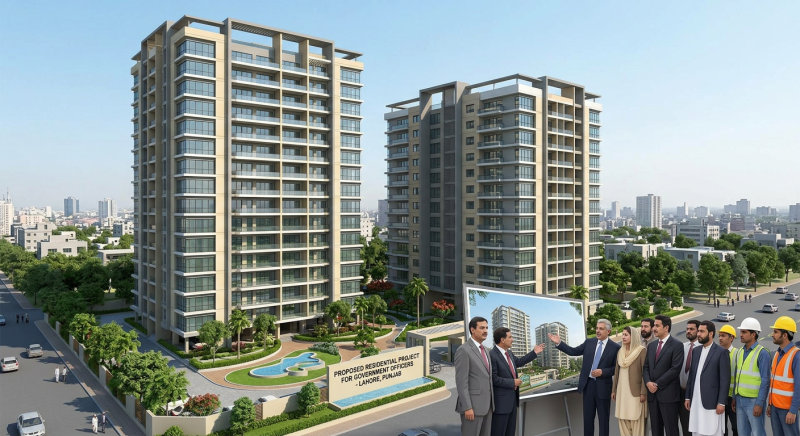
Punjab Chief Minister Maryam Nawaz Sharif recently showcased the province’s flagship Apni Chhat, Apna Ghar affordable housing initiative at the World Urban Forum in Baku, where it received international recognition as a leading innovative project. The programme has achieved significant milestones within its first year, including the completion of over 100,000 houses, with construction currently moving at a rate of 600 to 700 homes per day. By promoting a transparent, non-discriminatory loan distribution system, the initiative has attracted global attention from delegates and media, positioning Punjab’s housing model as a notable example of sustainable urban development.
Read more
NEPRA Approves Reduced Rs 2.8bn Investment Plan for HAZECO
The National Electric Power Regulatory Authority (NEPRA) has approved a Rs 2.818 billion Distribution Investment Plan (DIP) for the Hazara Electric Supply Company (HAZECO) for the 2025-26 fiscal year. This approval is significantly lower than HAZECO’s revised proposal of Rs 4.268 billion, reflecting NEPRA’s concerns regarding the company’s operational inefficiencies, underutilised assets, and insufficient justification for higher spending. By mandating stricter adherence to regulatory frameworks and emphasizing better demand forecasting, the regulator aims to improve system reliability while protecting consumers from the unnecessary tariff hikes that would have resulted from the company’s original, more costly investment plan.
Read more